



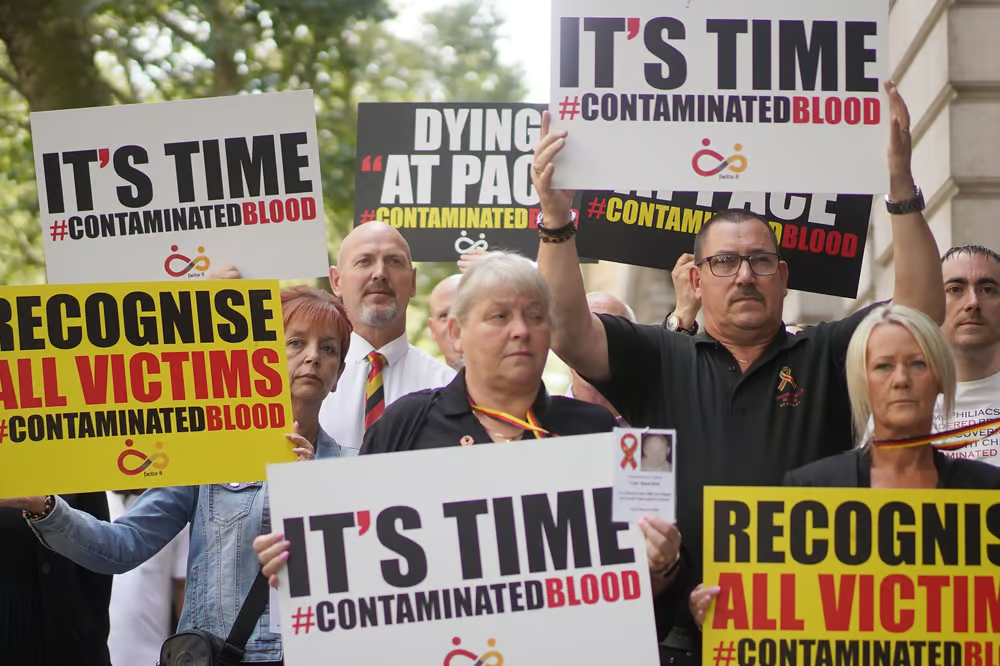

Victims of the infected blood scandal — one of the gravest treatment disasters in the history of the NHS — say they are terrified they may die before receiving the compensation they have waited decades for.
The official Infected Blood Inquiry will resume this week, with hearings scheduled for 7 and 8 May to scrutinise what campaigners say is a slow, inadequate Government response to the urgent need for justice. For those infected, the fear is simple and devastating: they may not live long enough to see a penny.
More than 30,000 people across the UK were infected with HIV and hepatitis C after being given contaminated blood and blood products between the 1970s and early 1990s. At least 3,000 have since died, and the remaining victims live with lifelong health complications and emotional trauma.
Gary Webster, who was infected while attending Lord Mayor’s Treloar College in Hampshire, voiced his concern bluntly: “There’s two people dying a week. They’re saying they hope to pay the infected by the end of 2027 and the affected by 2029 — just do the maths. People will die before they see a penny.”
The outcry is growing louder. The Haemophilia Society, which has long supported affected individuals, says the delays are compounding the hurt. Chief executive Kate Burt said: “These people’s lives were ruined by the scandal, and now the delays and lack of clarity from Government have added to their suffering. We hope the new hearings bring about real, immediate change.”
Since the main inquiry report was published in May last year, there has been increasing pressure on ministers to get a grip. Campaigners argue that the current process — led by the Infected Blood Compensation Authority (IBCA) — is riddled with delays and lacks true independence.
Rachel Halford of The Hepatitis C Trust called the situation “an embarrassment”. She said: “The IBCA is moving at a glacial pace. The Government must stop ignoring victims’ concerns. People feel alienated, and their suffering is being dragged out unnecessarily.”
The statistics don’t inspire much hope. As of late April, only 475 people had been invited to make a claim. Just 77 had received payments, totalling just over £78 million. While the Chancellor, Rachel Reeves, earmarked £11.8 billion for compensation in her October Budget, progress has been painfully slow.
Families of victims are particularly concerned about older dependents — widows and elderly parents — being left behind. Justine Gordon-Smith, whose father Randolph died in 2018 after being infected with hepatitis C, said: “We feel like we’re at the back of the queue. There needs to be proper recognition of the secondary trauma — the sacrifices made by children, spouses and parents.”
Lawyer Des Collins, whose firm represents hundreds of victims, echoed the widespread frustration: “People are dying while they wait. For many, justice will never come. Some claims are dying with the victims.”
More Read

Despite recent announcements by Cabinet Office minister Nick Thomas-Symonds promising quicker progress, campaigners remain sceptical. “We’ve heard it all before,” said Collins. “There’s a real fear this could just be another talking shop.”
The Government insists it is acting. A spokesperson said: “We remain fully committed to compensating the victims of this appalling scandal. We’ve already paid nearly £80 million and will continue to speed up claims.”
The IBCA has pledged to expand its operations, opening claims to another 200 people on 5 May and promising to onboard 100 new claims per week thereafter. But for victims like Gary Webster and thousands more, every week feels like a lifetime.
With the inquiry re-opening, hopes are pinned on a step-change in the Government’s attitude. As Sir Brian Langstaff, who chairs the inquiry, has pointed out — time is not on their side. For too many, the clock is already running out.

