



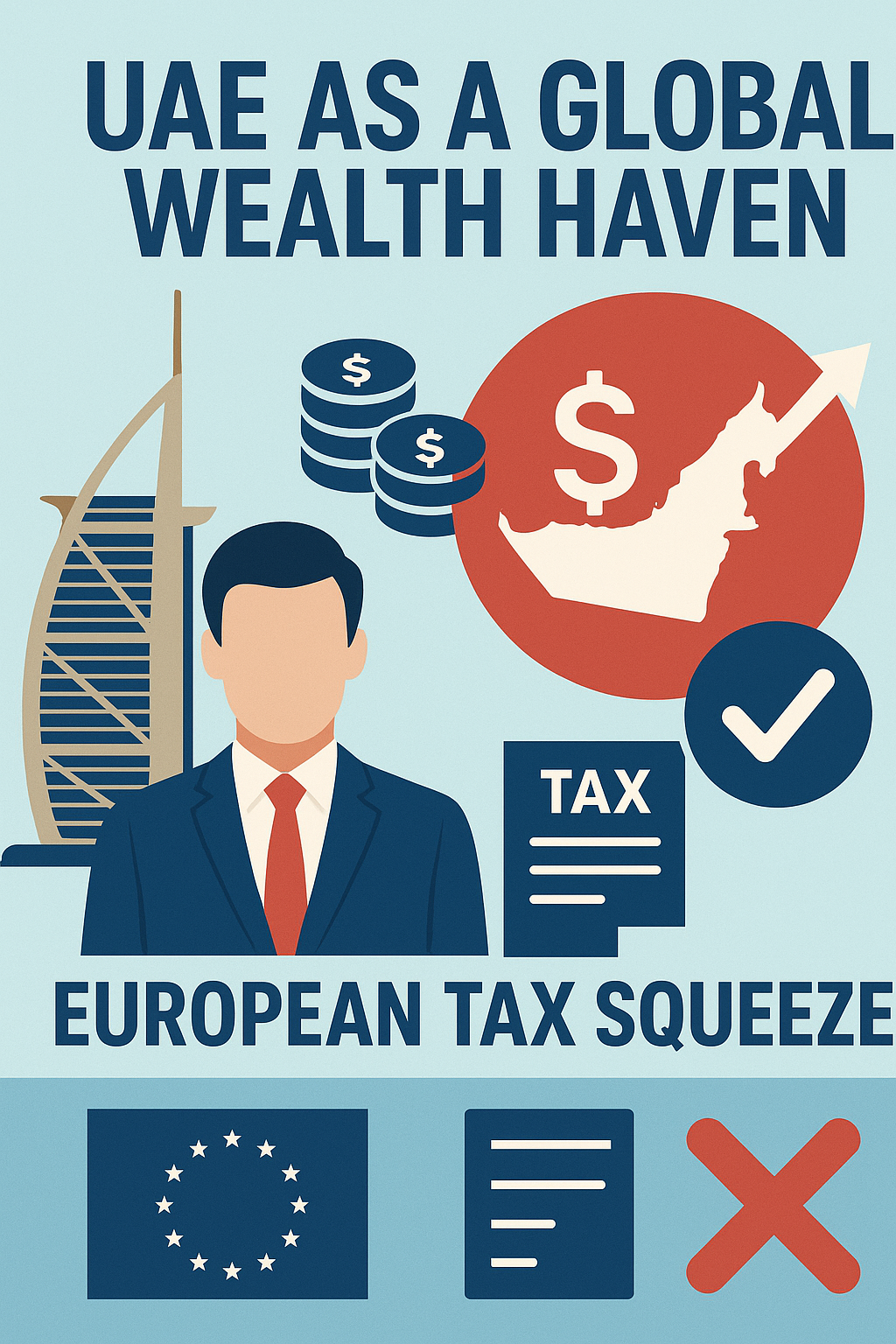

In 2025, the United Arab Emirates (UAE) solidified its reputation as the world’s most attractive destination for wealthy individuals and capital — a status amplified by rising tax pressures in many European countries, particularly the United Kingdom. This shift in global wealth patterns reflects broader economic and policy trends, with implications for investment flows, tax policy, and international competitiveness.
The UAE at the Top of Global Wealth Migration
According to the Wealth Migration Report 2025 by Henley & Partners and New World Wealth, the UAE is expected to welcome a record 9,800 millionaires in 2025, giving it the highest net inbound flow of high-net-worth individuals (HNWIs) globally. This outpaces major destinations such as the United States, which is forecast to attract around 7,500 millionaires over the same period. The National
The Emirates’ appeal spans multiple regions, drawing wealthy migrants from the UK, India, Russia, Southeast Asia and Africa. This broad attraction underlines the UAE’s global reach and its increasingly diversified base of incoming capital. The National
Europe’s Tax Squeeze and Wealth Outflows
Europe — particularly the UK — has experienced unprecedented outflows of wealthy residents, driven in large part by recent tax reforms. The UK is projected to lose 16,500 millionaires in 2025, the highest net outflow of any country tracked by Henley & Partners over the past decade. The National
Several European countries beyond the UK are also expected to record net outflows of wealthy individuals, including France, Spain, Germany, Norway and Sweden. Even within Southern Europe, although countries like Italy, Portugal and Greece are gaining some wealthy residents due to more attractive tax regimes, the overall pattern shows a regional shift away from traditional wealth hubs. financemiddleeast.com
This migration has been partially attributed to reforms such as the abolition of the UK’s non-domiciled tax regime, higher inheritance and capital gains taxes, and stricter reporting requirements on global assets. These changes have encouraged wealthy taxpayers to relocate to jurisdictions with more favourable tax environments. The National+1
Why the UAE Is So Attractive to Wealthy Individuals
1. Zero Personal Taxes
One of the main drivers of the UAE’s global wealth magnetism is its zero personal income tax, inheritance tax and capital gains tax, making it exceptionally attractive to individuals seeking to preserve and grow their wealth. This contrast is especially stark when compared to European countries tightening their tax systems. Khaleej Times
2. Golden Visa and Residency Incentives
The UAE’s Golden Visa programmes offer long-term residency to investors, entrepreneurs, and professionals who meet certain criteria. These programmes provide stability and legal certainty that appeals to wealthy families and global entrepreneurs. The National
3. Financial Infrastructure and Global Connectivity
Centers such as the Dubai International Financial Centre (DIFC) and Abu Dhabi Global Market (ADGM) have developed sophisticated regulatory frameworks modeled on international standards. These hubs attract wealth managers, family offices, hedge funds, and multinational corporations — adding depth to the UAE’s financial ecosystem. Khaleej Times+1
The UAE has also cultivated an attractive lifestyle and world-class infrastructure, including safety, healthcare, education and transport networks, making it a compelling place for wealthy migrants and their families. Khaleej Times
4. Crypto and Digital Wealth Migration
Recent rankings by Henley & Partners and other financial research indicate that the UAE also ranks among the top five most crypto-friendly jurisdictions in the world. It earned a perfect score for tax friendliness in the Crypto Wealth Report 2025, offering zero tax on crypto trading, staking and mining — a unique advantage for digital asset holders. The Times of India
Economic Impacts and Global Shifts
The rise of the UAE as a premier wealth haven is not just about individual tax savings — it reshapes global investment patterns:
- Capital flows: Wealth migration often brings investable assets, new businesses, and entrepreneurial dynamism to host economies.
- Real estate market boosts: High-net-worth individuals often invest in luxury property markets, energising construction, finance and related services.
- Competitive positioning: Cities like Dubai and Abu Dhabi are emerging as rivals to traditional Western financial centres, challenging hubs such as London, Zurich and Singapore. The National+1
What Europe and the EU Should Consider
The movement of wealth toward the UAE presents both challenges and lessons for European policymakers. While raising taxes may be justified on social and fiscal grounds, sudden or significant tax increases — especially when paired with reduced incentives for wealthy investors — can lead to capital flight and diminished competitiveness. To balance revenue needs with economic attractiveness, the EU and member states could consider the following:
1. Balanced Tax Policy
Craft tax reforms that raise necessary revenue while maintaining incentives for investment and high-value entrepreneurship. This includes carefully calibrated inheritance and capital gains taxes, and protections for entrepreneurial gains.
2. Enhanced Business Environment
Improve ease of doing business, regulatory transparency and governance frameworks to retain and attract talent and capital, even in the face of higher tax standards.
3. Investment in Innovation and Start-Ups
Strengthen innovation ecosystems and support high-growth sectors like tech, green energy, AI and finance to retain wealthy entrepreneurs through attractive non-tax incentives.
4. Strategic International Agreements
Engage in international tax cooperation — such as the OECD’s Pillar Two framework — while ensuring European locations remain competitive with global alternatives.
5. Infrastructure and Quality of Life Investments
Ensure cities remain magnets for talent by investing in housing, education, healthcare, cultural amenities and transportation systems.
Conclusion
The UAE’s rise as the world’s leading wealth haven in 2025 reflects a combination of tax policy, residency incentives, regulatory sophistication and global connectivity. As European countries tighten their tax regimes, many wealthy individuals are evaluating the trade-offs between fiscal obligations and lifestyle or financial benefits offered elsewhere. This trend underscores the importance of balanced tax policy, robust economic incentives, and global competitiveness for nations seeking to retain investment and prosperity in a shifting global landscape.

