




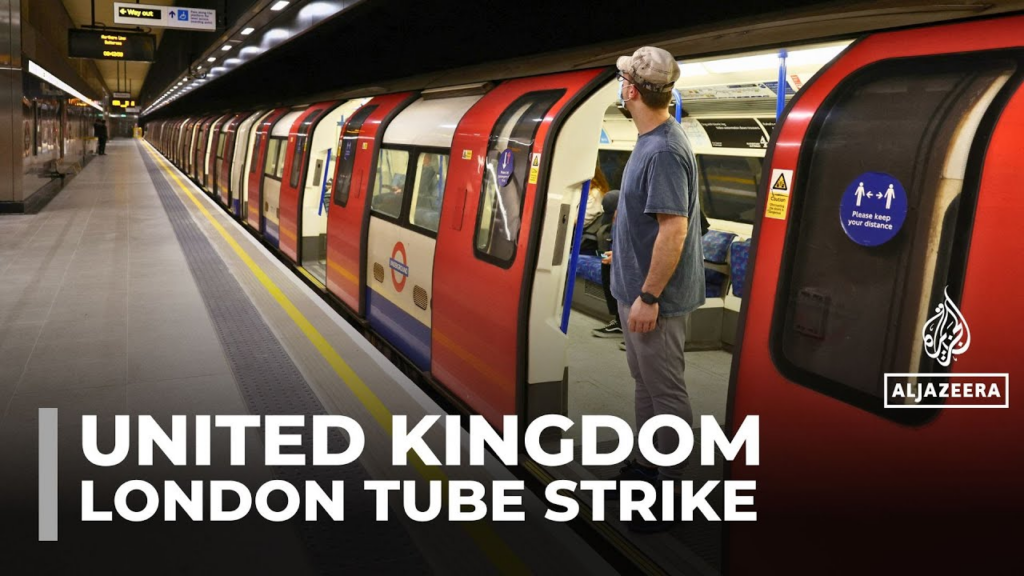
RMT drivers to walk out over four-day week dispute, with first strikes scheduled for next week
By Westferry Times Staff
18 March 2026
Docklands commuters face six days of disruption over the coming months as London Underground drivers announce a fresh programme of strikes in a dispute over working hours.
Members of the Rail, Maritime and Transport (RMT) union have voted to oppose the introduction of a four-day working week with condensed hours, with the first 24-hour walkout scheduled to begin at midday on Tuesday 24 March and run until 11:59 on Wednesday.
Strike Dates
The industrial action will take place on:
- 24–25 March (12:00 Tuesday – 11:59 Wednesday)
- 26–27 March (12:00 Thursday – 11:59 Friday)
- 21–22 April (12:00 Tuesday – 11:59 Wednesday)
- 23–24 April (12:00 Thursday – 11:59 Friday)
- 19–20 May (12:00 Tuesday – 11:59 Wednesday)
- 21–22 May (12:00 Thursday – 11:59 Friday)
The staggered midday start times mean disruption will effectively span two calendar days for each strike, affecting both morning and evening peak periods.
What This Means for the DLR and Local Services
While the strikes involve only RMT members—representing roughly half of all Tube drivers—Transport for London (TfL) has warned that most Tube lines will experience some disruption, though the impact is expected to be less severe than the total shutdown seen during September’s joint RMT-Aslef action.
For Docklands residents, the Docklands Light Railway (DLR) and Elizabeth line will continue to operate as normal, potentially offering alternative routes into central London. However, these services are expected to be significantly busier than usual.
Local bus routes serving the Isle of Dogs and Canary Wharf are also likely to experience increased passenger numbers.
The Dispute Explained
The RMT is opposing TfL’s proposal for drivers to move to a 35-hour, four-day week with paid meal breaks. While this would reduce the total working week by one hour, drivers would work longer individual shifts.
The union argues this arrangement risks driver fatigue and compromises safety, instead demanding a 32-hour week over four days—three hours less than currently proposed—for the same salary.
TfL maintains the change is entirely voluntary and that drivers may remain on a five-day week if they prefer. A trial is currently underway on the Bakerloo line.
Last-Ditch Talks Scheduled
There remains hope the strikes could be averted. Fresh negotiations between TfL and the RMT are scheduled for 20 March—just days before the first walkout.
RMT General Secretary Eddie Dempsey said: “There is still time for London Underground to come up with a workable solution but we will take strike action if we cannot get a negotiated settlement.”
TfL has urged the union to call off the strikes, describing them as “completely unnecessary.”
Travel Advice
TfL advises commuters to:
- Check before you travel using the TfL Go app
- Allow extra time for journeys
- Consider alternative routes via DLR, Elizabeth line, or local bus services
- Be prepared for crowded conditions on non-striking services
More information:tfl.gov.uk
Are you affected by the upcoming strikes? Email your stories to news@westferrytimes.co.uk

