




Pakistan is one of the most culturally diverse nations in the world, with a population exceeding 240 million that speaks more than 70 languages and is home to dozens of major ethnic groups and tribes. To understand this tapestry, we must look to the 7th Population and Housing Census of 2023, which was Pakistan’s first fully digital census, providing a massive, verifiable data set on the linguistic and ethnic identities of its citizens.
This census, managed by the Pakistan Bureau of Statistics (PBS), allows researchers to understand the evolving cultural landscape.
While the 2023 census is officially language-based rather than “tribe-based,” the data on mother tongue correlates directly with the country’s primary ethnic groups. This data reveals dynamic shifts in the population’s core linguistic identities over a 25-year period (1998 to 2023).
According to the 2023 Digital Census (compiled by Gallup Pakistan from PBS data), the breakdown of the population by mother tongue is:
| Language | 2023 Percentage | 1998 Percentage | Status/Trend |
| Punjabi | 36.98% | 44.15% | Decreasing |
| Pashto | 18.15% | 15.42% | Increasing |
| Sindhi | 14.31% | 14.1% | Fluctuating/Stable |
| Saraiki | 12.00% | 10.53% | Increasing |
| Urdu | 9.25% | 7.57% | Increasing |
| Balochi | 3.38% | 3.57% | Decreasing |
| Hindko | 2.32% | Not Isolated | — |
| Brahui | 1.16% | Not Isolated | — |
1. The major tribes and ethnolinguistic identities
- Punjabis (Punjabi Language): The largest group, based primarily in the fertile Punjab province. Punjabi identity is heavily cultural and geographical, encompassing countless distinct castes and historical kinship groups. Despite their dominance, their proportion of the total population has shown the most significant decline over the last quarter-century.
- Pashtuns (Pashto Language): Located in Khyber Pakhtunkhwa (KP) and Northern Balochistan, Pashtuns are the second-largest group. Pashtun society is deeply rooted in its tribal structure, with famous tribes like the Afridi, Khattak, Durrani, and Yousafzai defining social hierarchies and territories.
- Sindhis (Sindhi Language): Native to Sindh, they have a strong, distinct cultural identity heavily influenced by Sufi Islam. Sindh also hosts the largest Hindu minority in Pakistan.
- Saraikis (Saraiki Language): This group resides in central and southeastern Pakistan, primarily “South Punjab,” sharing linguistic affinities with Punjabi but maintaining a unique regional identity. Their recognition as a separate category has been a notable demographic shift.
- Muhajirs (Urdu Language): Muhajirs are a unique group of distinct tribes or regions from across India who migrated to Pakistan during the 1947 partition. They are settled mostly in urban areas of Sindh, such as Karachi and Hyderabad, and have made Urdu the official national language.
- Baloch (Balochi Language): Residing in the vast, arid southwestern province of Balochistan. The Baloch are known for their highly organized tribal system (e.g., Bugti, Marri, Rind, Mengal).
2. Minor and regionally concentrated languages
Beyond the top six, Pakistan is a mosaic of smaller linguistic communities:
- Hindko is a primary regional language in the Hazara division of KP.
- Brahui is a unique Dravidian language found in the heart of Balochistan, isolated from other Dravidian languages typically found in South India.
- Shina, Balti, and Burushaski are the languages of Gilgit-Baltistan in the extreme north, known for their stunning mountain regions.
- Kalasha is spoken by a small, unique non-Muslim community in Chitral (less than 0.003% of the population).
Online census check and references
The key reference point for this data is the government agency responsible for gathering it: Reference URL: https://www.pbs.gov.pk/census/
Pakistan Bureau of Statistics (PBS)
The PBS maintains a main portal where digital census results, work plans, questionnaires, and national reports are uploaded. You can find detailed breakdowns of the 2023, 2017, and earlier censuses on their main “Census” section.
While complete individual verification data is protected, the PBS portal provides access to regional and district-wise statistical summaries that detail the distribution of languages. This allows residents to check how their community was enumerated in the final tally. For historical and comparative analysis, organisations like Gallup Pakistan synthesise this raw census data into public reports.
Visualising the Pakistan 2023 digital census
The generation of images can show how the data is collected and visualised by the Pakistan Bureau of Statistics.
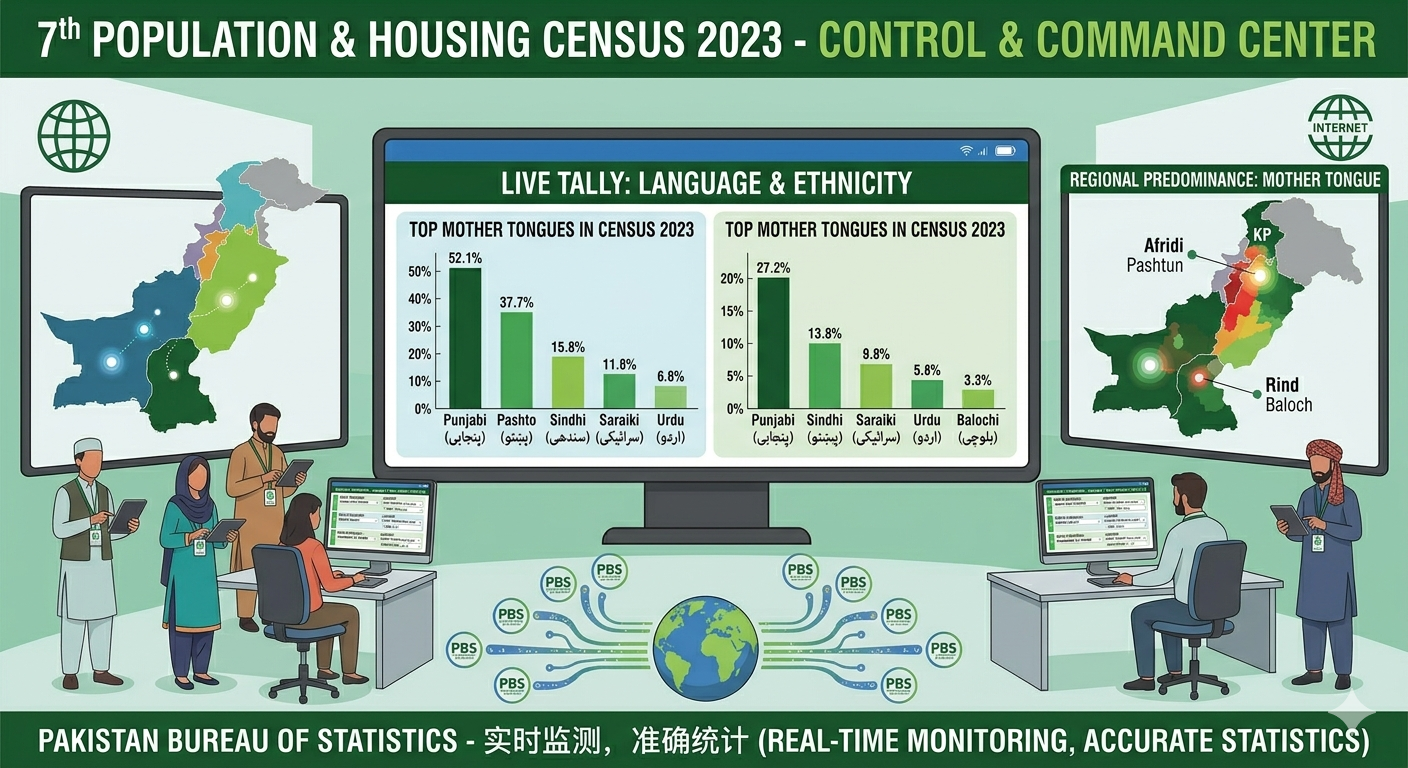
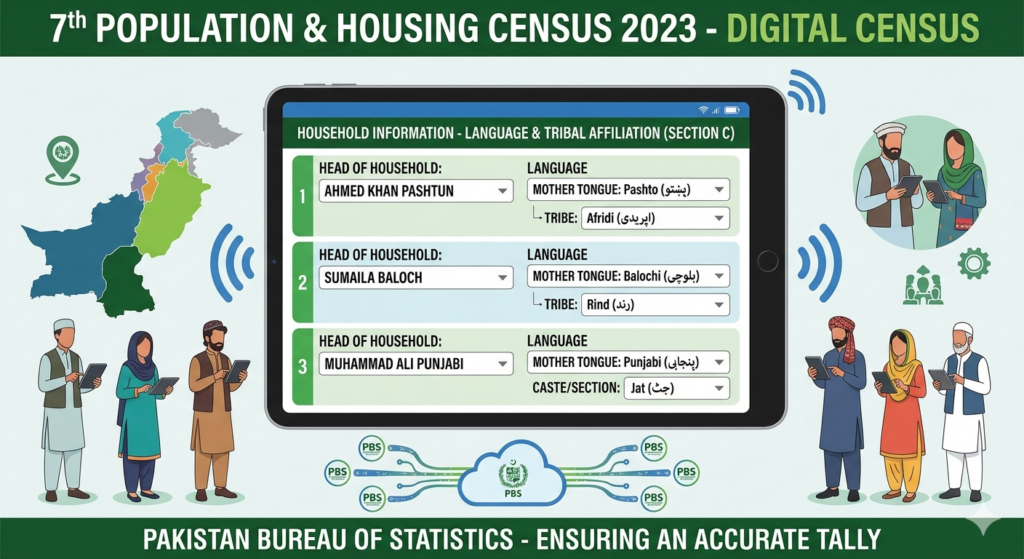
Image 1: The Digital Census Questionnaire
This infographic shows a mock-up of the 7th Digital Census Self-Enumeration Portal, displaying the specific section used to record household information on language and ethnicity in three distinct official Pakistani scripts (Urdu, English, and Sindhi).
Image 2: Digital Census Monitoring and Result Tally
This infographic illustrates how the 7th Digital Census 2023 data, visualised in Image 1, was monitored in real-time. It moves from the input device (tablet) to a central Control and Command Center where incoming language data from diverse regions—specifically mentioning Pashto, Balochi, and Punjabi—are aggregated and displayed on live, dynamic charts for the entire nation.
Reference URL: https://www.pbs.gov.pk/census/

