



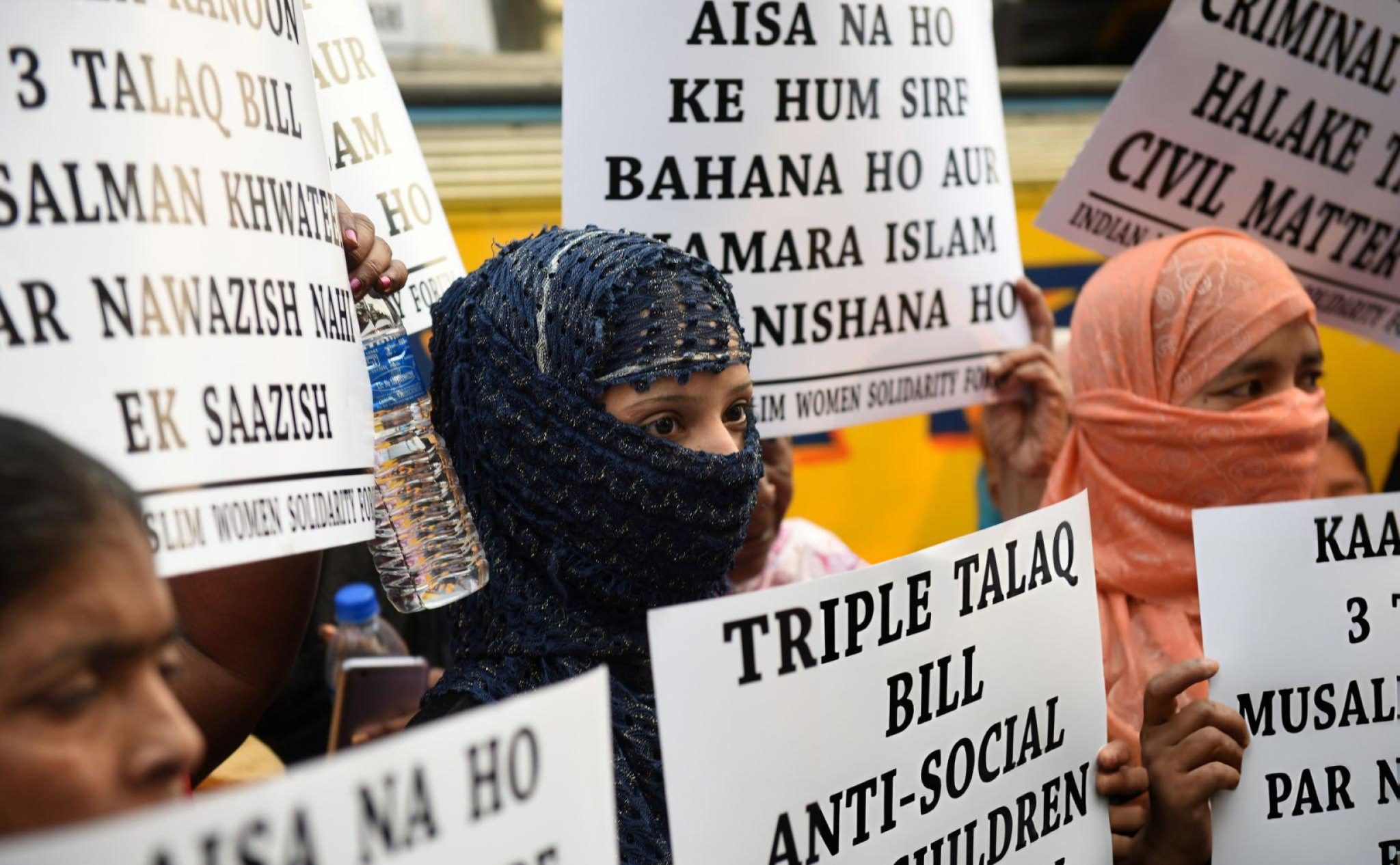

In a far-reaching judicial verdict, the Supreme Court granted relief to Muslim women against illegal divorces through triple talaq and confirmed they can claim maintenance under the provisions of Section 125 of the CrPC. Hence, a very important step in protecting their rights was taken by making them equal in terms of financial support.
Triple talaq, under which a Muslim husband can unilaterally and instantly divorce his wife—by saying the word “talaq” three times—has long been an epicenter of contestation in India. This practice charges discrimination against women by denying them any legal redress or economic security, thus leaving them exposed to a wide set of deprivations in society and the economy.
It is, therefore, the judgment of the Supreme Court that shall ultimately redeem the forlorn plight of the Muslim woman who is abandoned or divorced by triple talaq sans due process and legal justification. By interpreting Section 125 of the CrPC, making maintenance obligatory upon the husband for wives who are unable to maintain themselves, the court asserted that such women can claim maintenance from their erstwhile husbands.
Section 125 of the CrPC applies to all women, regardless of their religion, under which a legal framework is afforded to seek maintenance in view of abandonment or divorce. The top court’s verdict extends this coverage to Muslim women divorced through triple talaq, wherein such a woman can now legally claim maintenance from her husband under Indian law for sustenance and well-being.
More Read

Though the judgment was based on the principles of gender equality and social justice, it is certainly not oblivious to constitutional promises of non-discrimination and equal protection of the law. The very basic right to dignity and economic independence is upheld by holding the financial rights of women who are victims of triple talaq, since these are the essentials for the empowerment and socio-economic inclusion of such Muslim women.
Such a landmark judgment has been the raison d’être of years of advocacy movements and legally fought battles for the injustices perpetrated by triple talaq. In 2017, the Supreme Court declared this practice of instant triple talaq unconstitutional and illegal on the grounds that it is arbitrary and discriminatory. The judgment was seen as a victory for gender justice and women’s rights and henceforth led to a precedent for further legal reforms.
Consequently, in 2019, India’s Parliament enacted the Muslim Women Protection of Rights on Marriage Act, which criminalized triple talaq and made stringent penalties available against such offenders. Therefore, the legislation aimed at discouraging the arbitrary and extra-constitutional ways of divorcing Muslim women by way of triple talaq, hence reaffirming the apex court’s commitment to constitutional values and women’s rights.
Despite such legislative and judicial interventions, however, there are numerous challenges to the proper implementation of laws and policies with regard to ensuring the protection of the rights of Muslim women. Social attitudes, cultural norms, and patriarchal practices work as barriers for a woman in her pursuit of justice or realization of her rights within her community or family.
In this light, the verdict of the apex court on maintenance under Section 125 of the CrPC was much needed and ahead in attacking these challenges and giving a legal platform to the Muslim women who are victims of triple talaq. The court gave them the right to claim maintenance, thus arming the women to raise their voice and seek compensation for all economic distress by way of arbitrary divorces.
This judgment of the Supreme Court is not simply a question of one or two individual cases; it has now taken the form of a larger commitment to gender justice and equality in Indian law. It reiterates clearly that courts are intrinsic not only to interpenetrating but also to applying legal provisions to assure the rights of the most marginalized and vulnerable, including Muslim women, who suffer from both systemic discrimination and socio-economic disadvantages.
Awareness-raising, education of communities, and enhancement of benchourt laws at later stages will prove equally important for ensuring the practical application of laws that acknowledge the protection of the rights of Muslim women. Knowledge about rights and access to legal aid services can equip women to be more autonomous and resilient to stand adversities, including problems in marriage and divorce, in a manner that is less daunting.
Thus, the Supreme Court has held that a Muslim woman, who was illegally divorced by triple talaq, is entitled to maintenance under Section 125 of the CrPC. In effect, this constitutes an important victory in the long struggle for gender justice and equality in India. Therefore, having been granted claims for maintenance, it reaffirms the dignity and empowerment of Muslim women in light of constitutional principles on nondiscrimination and equal protection under the law.

