




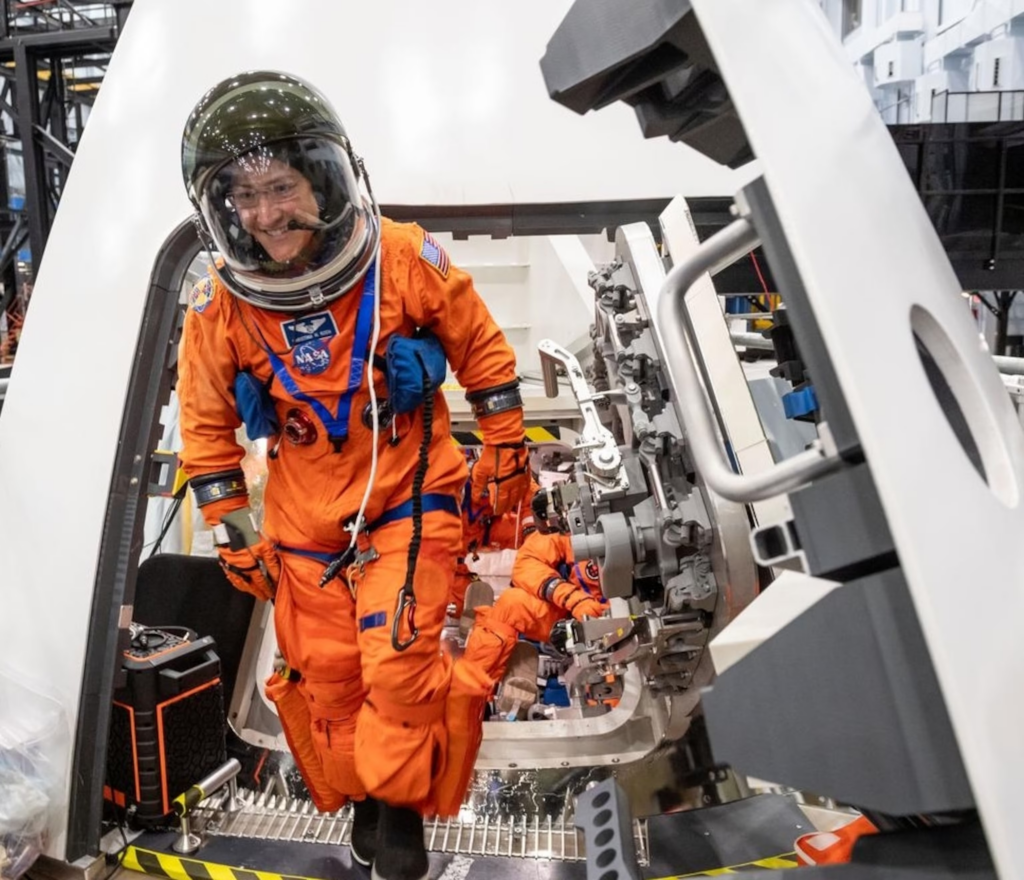
NASA’s Artemis II mission has made history, with its crew travelling farther from Earth than any humans before during their journey around the Moon.
The astronauts surpassed the previous record of 248,655 miles set by the Apollo 13 crew in 1970, marking a major milestone in modern space exploration.
Breaking a decades-old record
The four-member crew aboard the Orion spacecraft reached a distance of more than 252,000 miles from Earth, officially setting a new record for human space travel.
The achievement comes more than half a century after the Apollo era, making Artemis II the first mission in decades to send humans beyond Earth’s orbit.
Emotional moments in space
During the mission, the crew shared an emotional tribute by naming a lunar crater “Carroll” in memory of commander Reid Wiseman’s late wife.
The moment highlighted the human side of space exploration, as astronauts balanced historic achievements with personal reflections far from Earth.
Mission objectives and journey
The Artemis II mission is a 10-day journey designed to test systems and prepare for future Moon landings.
Although the astronauts will not land on the Moon, the Orion spacecraft will travel around the far side before returning to Earth.
During the flyby, the crew is conducting lunar observations, capturing high-resolution images and studying the Moon’s surface in detail.
Technology and observations
Equipped with advanced digital cameras and imaging tools, the astronauts are documenting both the near and far sides of the Moon.
They are also observing geological features, including craters and ancient lava plains, contributing valuable scientific data for future missions.
What happens next
As the spacecraft passes behind the Moon, communication with Earth will temporarily be lost—a planned phase of the mission.
After completing the lunar flyby, Orion will begin its journey back to Earth, eventually re-entering the atmosphere and splashing down in the Pacific Ocean.
A new era of space exploration
The Artemis II mission represents a significant step forward in NASA’s long-term plans to return humans to the Moon and eventually travel to Mars.
By breaking distance records and testing deep-space capabilities, the mission is laying the groundwork for the next generation of human exploration beyond Earth.

