




Introduction
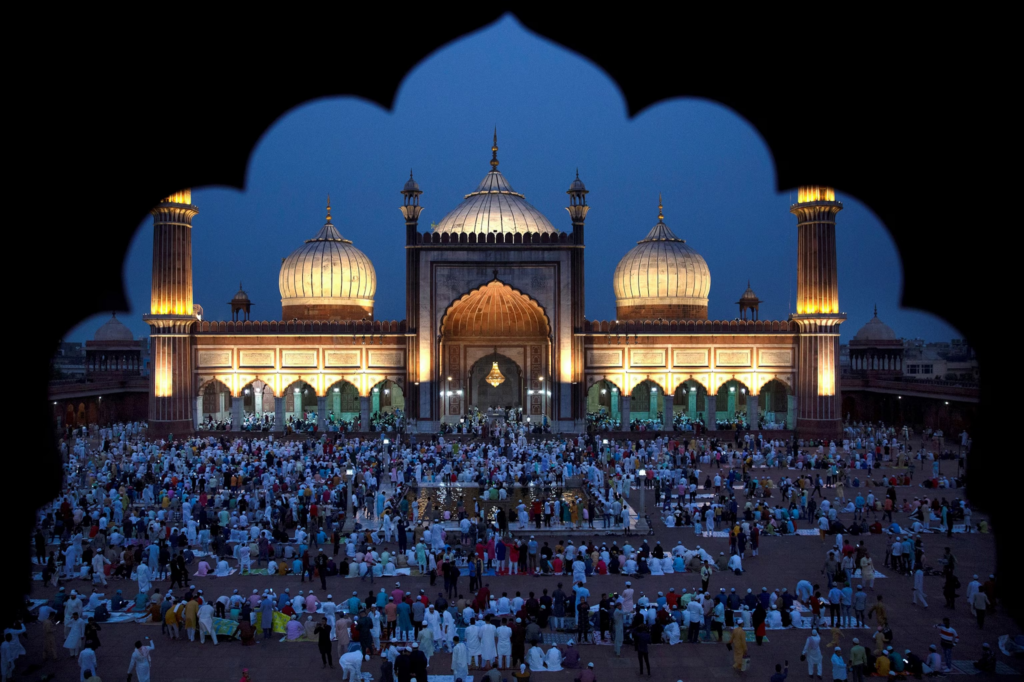
As the holy month of Ramadan 1447 AH draws to a close, millions of Muslims across the United Arab Emirates and worldwide turn their eyes to the western horizon, awaiting the sighting of the Shawwal crescent moon. This ancient tradition marks the transition from a month of fasting and spiritual reflection to the joyous celebration of Eid Al Fitr—the “Festival of Breaking the Fast.”
The Significance of Moon Sighting
The Islamic calendar operates on lunar cycles, with each month beginning only after the crescent moon is physically sighted. This practice, rooted in prophetic tradition, determines the exact date of Eid Al Fitr, which falls on the first day of Shawwal, the tenth month of the Hijri calendar.
Unlike the Gregorian calendar, which follows the sun, the Islamic lunar calendar shifts approximately 10-11 days earlier each year, causing Eid to fall in different seasons over time. This year, Eid Al Fitr 2026 arrives in mid-March, bringing with it the promise of spring celebrations across the Emirates.
UAE Moon Sighting Process: March 18, 2026
On Wednesday, March 18, 2026—corresponding to the 29th day of Ramadan—the UAE’s official moon-sighting machinery swung into action. The UAE Council for Fatwa called upon residents across all seven emirates to observe the western horizon shortly after sunset
.
The Official Procedure
The UAE Moon-Sighting Committee convened in Abu Dhabi following Maghrib prayers at approximately 6:32 PM to review reports from
:
- Astronomical observatories equipped with advanced telescopes
- Specialized observation teams positioned at high-altitude locations
- Public sightings submitted through official channels
- Scientific data on moon birth times and visibility conditions
Ibrahim Al Jarwan, chairman of the Emirates Astronomical Society, noted that the Shawwal crescent would be born at 5:23 AM UAE time on Thursday, March 19, but astronomical calculations suggested it would be invisible on March 18 due to its position relative to the sun
.
Weather Challenges
The National Center of Meteorology forecast partly cloudy to cloudy conditions with strong northwesterly winds up to 40 km/h on March 18, potentially complicating visibility efforts
. Such conditions often necessitate reliance on optical instruments or extended observation periods.
Global Moon Sighting: A World Divided by Longitude
The Islamic world does not celebrate Eid simultaneously. The date varies based on geographical location and local moon visibility, creating a beautiful tapestry of staggered celebrations across time zones
.
Saudi Arabia and the Gulf
Saudi Arabia’s Supreme Court issued an official call for moon sighting on March 18, with observation stations at Sudair and Tumair and astronomers from Al Maj’mah University leading the effort
. If sighted, Eid would begin March 19; otherwise, March 20.
South Asia
Countries including India, Pakistan, and Bangladesh typically sight the moon a day later due to their eastern position. With Ramadan beginning February 18-19 in the region, Eid is expected on March 20 or 21, depending on local observations on the evening of March 19
.
Southeast Asia and Beyond
- Australia: The Australian Fatwa Council announced Eid for Friday, March 20, based on astronomical consultations
- Turkey and Singapore: These nations rely on astronomical calculations rather than physical sightings, with Turkey marking March 20 and Singapore March 21
Expected Eid Date in the UAE
While the official announcement awaited the March 18 sighting, astronomical projections from the Sharjah Academy for Astronomy, Space Sciences and Technology indicated that Eid Al Fitr 2026 would most likely fall on Friday, March 20
.
This prediction suggested Ramadan would complete its full 30-day cycle, a occurrence that happens roughly half the time in the Islamic calendar. The crescent moon on March 19 would offer better visibility conditions, staying above the horizon for approximately 29 minutes after sunset
.
Eid Preparations and Prayer Arrangements
Prayer Timings Across the Emirates
The General Authority of Islamic Affairs, Endowments & Zakat announced official Eid prayer timings for all seven emirates:
Table
| Emirate | Expected Prayer Time |
|---|---|
| Fujairah | 6:12 AM |
| Ras Al Khaimah | 6:15 AM |
| Dubai | 6:18 AM |
| Abu Dhabi City | 6:22 AM |
| Madinat Zayed | 6:25 AM |
Worshippers were advised to arrive 30-35 minutes early to accommodate large congregations.
Safety Measures
In a significant departure from tradition, Eid prayers in 2026 were restricted to mosques only, with open-air prayer grounds suspended nationwide
. This decision, coordinated between the General Authority of Islamic Affairs and local departments in Dubai and Sharjah, reflected ongoing safety measures across the Gulf region.
The UAE Council for Fatwa also clarified that if Eid fell on a Friday, both Eid and Jumu’ah (Friday) prayers would be obligatory, with historical precedent showing the Prophet Muhammad (PBUH) performed both when they coincided .
Public Holidays and Festivities
The UAE confirmed a four-day public holiday for the public sector beginning March 19, regardless of the moon sighting outcome . Private sector workers similarly benefited from a four-day weekend, with Sunday, March 21 falling within the UAE’s weekend structure.
Transportation and Services
- Sharjah: Free public parking for the first three days of Eid, with enhanced bus and marine services
- Dubai and Abu Dhabi: Extended metro hours and additional public transport capacity to accommodate Eid travelers
The Spiritual Essence of Chaand Raat
The evening before Eid—known as Chaand Raat or “Night of the Moon”—transforms UAE cities into vibrant centers of anticipation. Families gather for last-minute shopping, streets fill with festive decorations, and communities share the collective joy of completing Ramadan
.
This year, whether the crescent appeared on March 18 or 19, the spirit of unity prevailed. The moon sighting represents more than calendar calculation; it embodies the Islamic principles of community cooperation, patience, and submission to divine timing.
Conclusion
As the UAE awaits the official announcement, the process itself serves as a reminder of Islam’s balance between tradition and modernity. While telescopes and astronomical calculations provide scientific guidance, the human act of looking skyward connects believers to centuries of shared heritage.
Whether Eid Al Fitr 2026 falls on March 19 or 20, the celebration remains constant—a day of gratitude, charity (Zakat al-Fitr), family reunions, and the sweet taste of sheer khurma after a month of dawn-to-dusk fasting. Across the Emirates and the world, the Shawwal crescent continues to unite Muslims in a moment of collective joy, proving that some traditions transcend technology and time.
Key Facts at a Glance:
- Moon Sighting Date: March 18, 2026 (29th Ramadan)
- Likely Eid Date: March 20, 2026 (Friday)
- Prayer Locations: Mosques only (no open grounds)
- Public Holiday: 4 days confirmed

