




By Westferry Times News Desk
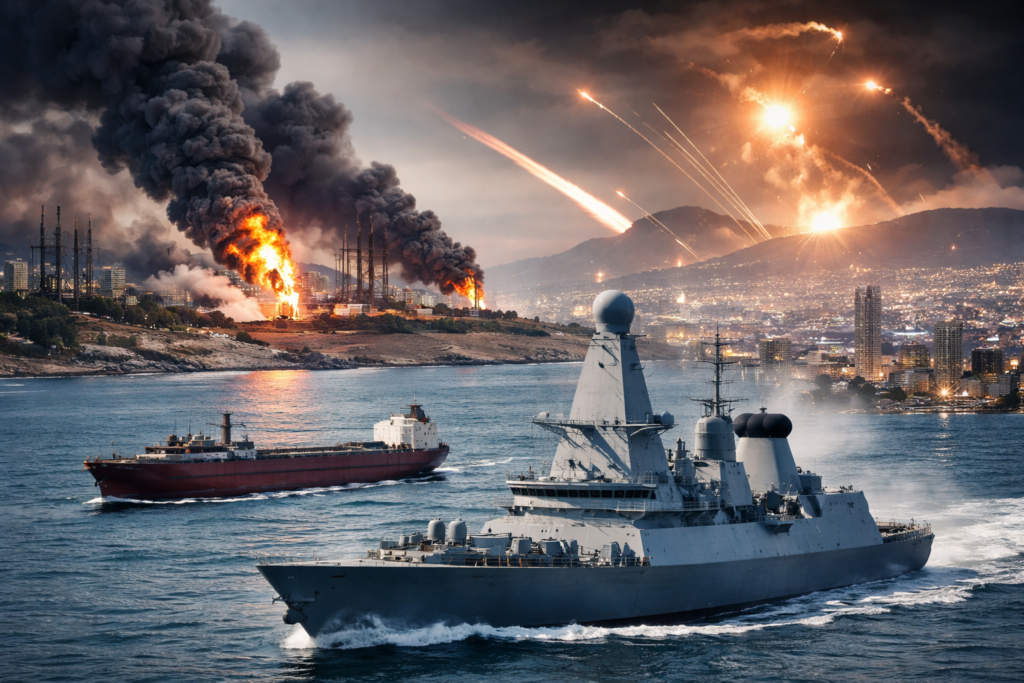
Global tensions intensified on Monday as the conflict involving Iran, Israel and the United States continued to escalate, while Western leaders warned against the risk of a wider regional war. The crisis has been further aggravated by the effective closure of the Strait of Hormuz, one of the world’s most critical oil shipping routes.
UK Prime Minister Keir Starmer said Britain would not be drawn into a broader conflict despite increasing pressure from Washington to assist with securing the strategic waterway. Speaking earlier, Starmer said the UK was working with international partners on a “viable plan” to address the disruption but stressed that any response must avoid widening the war.
The comments came after US President Donald Trump urged allies to provide support, including naval assistance, to ensure the safe passage of commercial shipping through the Strait of Hormuz. Trump warned that a failure by allied nations to help could be “very bad for the future of NATO.”
However, several countries have responded cautiously. Germany’s government rejected the idea that the conflict falls within the scope of the alliance, with officials stating the war with Iran “has nothing to do with NATO.” Other nations, including Japan and Australia, have also signalled reluctance to send naval forces to the region.
Strategic Oil Route Under Threat
The Strait of Hormuz is the world’s busiest oil transit chokepoint, with roughly 20% of global oil supplies passing through the narrow channel each day. In 2025 alone, about 20 million barrels of oil moved through the strait daily, making its disruption a major concern for global markets.
Iran has effectively restricted access to the waterway following the outbreak of hostilities, allowing passage mainly for vessels carrying oil to certain allies. Iranian Foreign Minister Abbas Araghchi said the route remains closed “to our enemies,” while insisting Tehran had not sought a ceasefire or direct talks with the United States.
The closure has triggered severe volatility in energy markets and disrupted supply chains worldwide. The International Energy Agency (IEA) has already released 400 million barrels of emergency reserves, describing the current disruption as potentially the largest in the history of the global oil market.
IEA Executive Director Fatih Birol said additional reserves could be deployed if the crisis persists, although he warned that such measures are only temporary solutions while shipping remains restricted.
Intensifying Military Operations
Meanwhile, military activity across the Middle East continues to intensify.
Israel announced it had launched a “wide-scale wave of strikes” targeting infrastructure in major Iranian cities including Tehran, Shiraz, and Tabriz. Footage and images emerging from Iran show heavy damage to buildings and emergency crews working through rubble following the strikes.
In parallel, Iran has continued missile and drone attacks across the region. Authorities in Qatar reported intercepting a second wave of missiles, while the United Arab Emirates confirmed drone strikes had sparked fires at an oil industrial facility in Fujairah. Saudi Arabia said it had shot down dozens of drones overnight.
Debris from intercepted Iranian missiles also fell in several locations in Jerusalem, including near the historic Church of the Holy Sepulchre and close to Israel’s parliament, the Knesset. Emergency services reported several minor injuries but no fatalities.
Calls for De-escalation
Despite the escalation, international leaders are increasingly emphasising the need for diplomatic solutions. Calls for “de-escalation” have been echoed by several governments concerned about the economic consequences of the conflict, particularly rising energy prices.
Regional mediators, including Oman, have urged a return to political dialogue, though both Washington and Tehran have so far denied that formal negotiations are underway.
With global oil supplies disrupted and military tensions spreading across the Gulf, analysts warn that the situation could have far-reaching consequences for the international economy if the Strait of Hormuz remains blocked.
For now, Western governments are scrambling to find a strategy that restores shipping in the region without triggering a wider war.
— Westferry Times

