




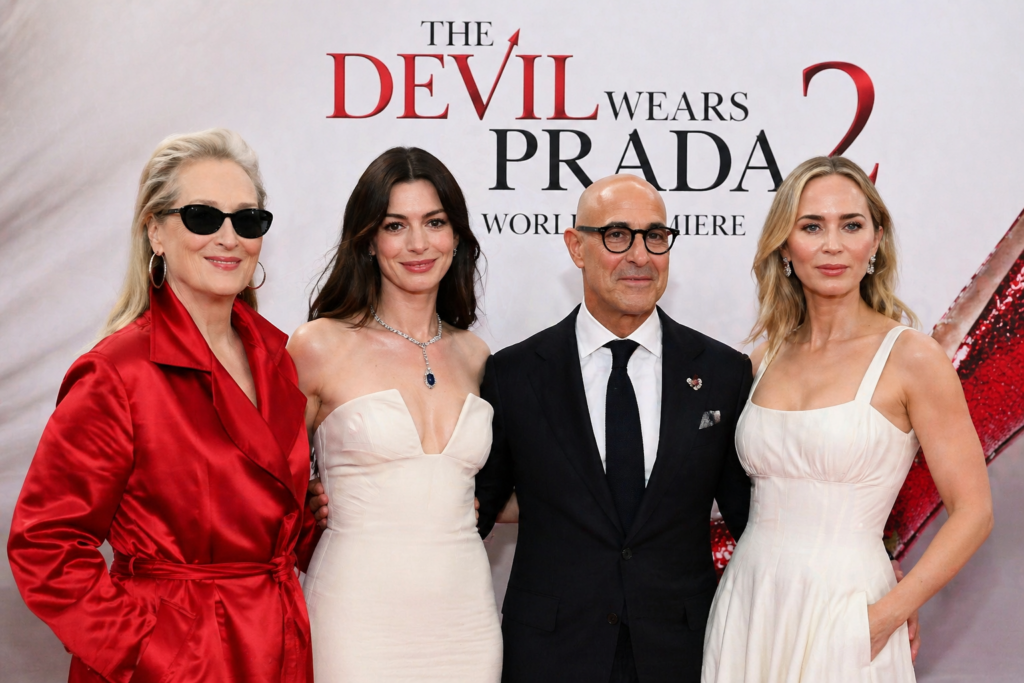
The London premiere of The Devil Wears Prada 2 brought glamour back into the spotlight—but behind the spectacle lies a deeper story about how the fashion industry has fundamentally changed over the past two decades.
Held at the National Gallery, the event gathered major figures including Meryl Streep, Anne Hathaway, Emily Blunt and Stanley Tucci. Streep reprised her iconic role as Miranda Priestly, widely seen as inspired by Anna Wintour.
The sequel revisits the fictional Runway magazine in an era where print publishing is in decline. Once-powerful editors who dictated global trends now face a very different reality—one shaped by digital media, influencer culture, and the growing dominance of luxury brands themselves.
From Gatekeepers to Collaborators
The original film, released in 2006, portrayed fashion editors as near-untouchable gatekeepers. But the sequel reflects a world where that authority has diminished. Brands now hold more influence, and editorial independence is often tied to commercial partnerships.
In a key narrative shift, Emily Charlton—played by Blunt—moves from publishing into the luxury brand world, symbolising this transfer of power. Editors who once set the agenda must now collaborate with the very brands they once controlled.
Industry Evolution in the Digital Age
The transformation is largely driven by the collapse of traditional print media and the rise of digital platforms. Consumers no longer rely solely on magazines for style direction. Social media, influencers, and direct-to-consumer marketing have reshaped how trends emerge and spread.
Despite this upheaval, fashion’s cultural appeal remains strong. The film’s release has been embraced by the industry it once satirised—an ironic twist, given that designers initially distanced themselves from the original movie.
The Enduring Power of Fashion Icons
The sequel also highlights changing attitudes toward age and influence. Streep and Wintour—both in their 70s—continue to dominate the fashion narrative, appearing together on the cover of Vogue. Their presence reflects a shift away from the industry’s historic obsession with youth toward a broader recognition of longevity and personal branding.
Figures like Coco Chanel and Iris Apfel are cited as examples of enduring influence—women who shaped fashion across decades.
Rising Costs of Luxury Fashion
The film also underscores how dramatically fashion prices have increased since the first instalment. Iconic items seen in the original—such as Chanel jackets, Fendi bags, and Jimmy Choo shoes—have surged in price, in some cases more than doubling.
This “fashion inflation” reflects both increased demand and the repositioning of luxury goods as status symbols in a globalised market.
Reference
- The Guardian — “Death of the gatekeeper: Devil Wears Prada 2 depicts a revolution in the fashion world” by Jess Cartner-Morley (24 April 2026)

