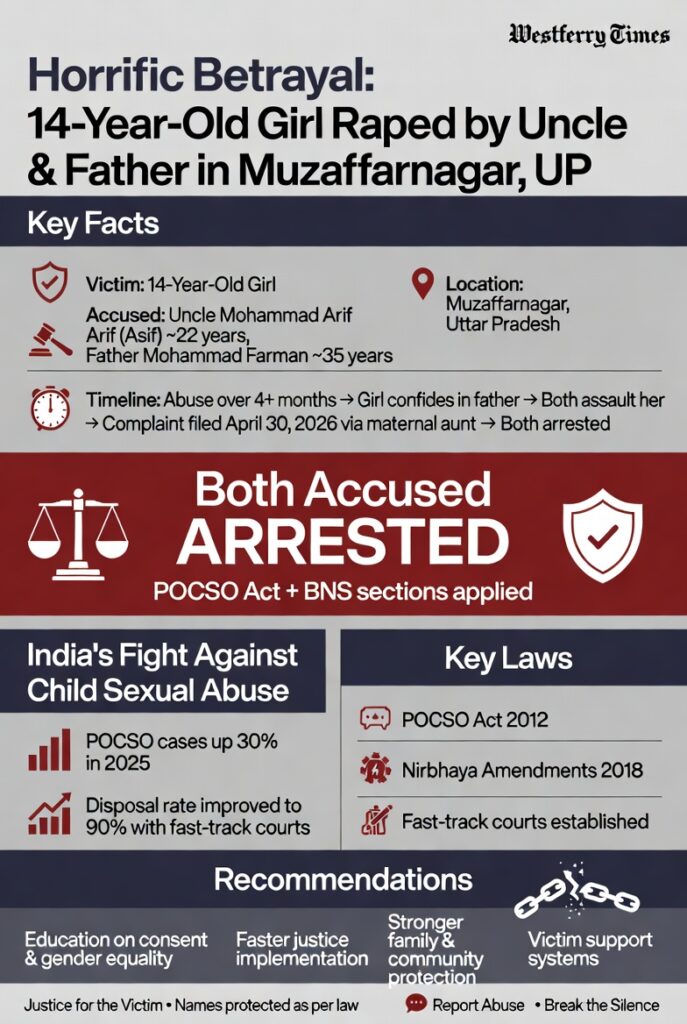



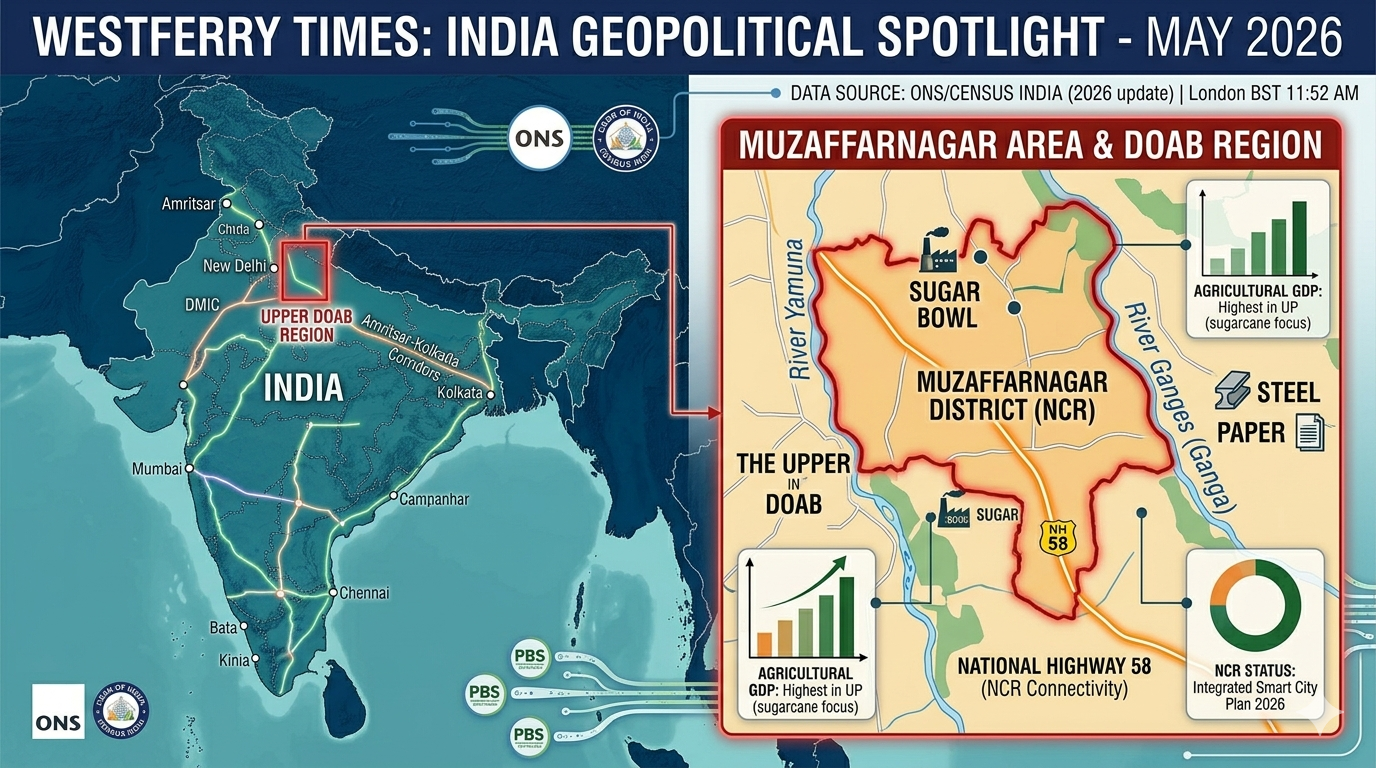

By Westferry Times (Original reporting, May 2026) In a deeply disturbing case from Muzaffarnagar, Uttar Pradesh, a 14-year-old girl was allegedly subjected to repeated sexual assault by her uncle and later by her own father. According to reports, the uncle, identified as Mohammad Arif (also referred to as Mohammad Asif in some accounts, aged around 22), raped the minor multiple times over a period of four months and threatened her with death to keep her silent. When the girl confided in her father, Mohammad Farman (aged 35), he allegedly raped her as well instead of offering protection.
on the x.com the girl’s mother had reportedly left the family years earlier. The victim eventually disclosed the abuse to her maternal aunt, who helped her file a complaint with the police on April 30, 2026. Both men were arrested shortly afterward. Police registered an FIR under relevant sections of the Bharatiya Nyaya Sanhita (BNS) — including Sections 65(1), 115(2), and 351(3) — and Sections 5 and 6 of the Protection of Children from Sexual Offences (POCSO) Act. A medical examination was conducted, and the accused remain in custody as the investigation continues.
facebook.com This case highlights a horrific betrayal of trust within the family and the vulnerability of minor girls even in their own homes. Why Sexual Violence against girls persists in India continues to grapple with high rates of sexual violence. According to National Crime Records Bureau (NCRB) data, thousands of rape cases are reported annually, with a significant portion involving minors. In many cases, perpetrators are known to the victims — relatives, acquaintances, or family members — which accounts for a large share of incidents.
en.wikipedia.org Contributing factors include:
- Patriarchal attitudes and gender inequality: Deep-rooted societal norms that devalue girls and women.
- Under reporting: Stigma, fear of reprisal, and distrust in the justice system mean many cases never reach the police.
- Weak implementation of laws: Despite strong legislation, delays in investigation, low conviction rates (often below 30-40% for rape cases), and case backlogs undermine deterrence. cnn.com
- Socio-economic issues: Poverty, lack of education, and overcrowded living conditions can exacerbate risks.
- Family and power dynamics: Cases of incest, like this one, are particularly under reported due to family pressure and shame.
High-profile cases, such as the 2012 Nirbhaya gang rape, have led to public outrage and legal reforms, but systemic challenges remain. India’s Legal Framework for Protection India has strengthened laws significantly, especially post-2012:
- Criminal Law (Amendment) Act, 2013 (Nirbhaya Act): Expanded the definition of rape, introduced harsher punishments (including death penalty in certain cases), and added offences like stalking and acid attacks.
- POCSO Act, 2012 (amended later): Provides special protections for children against sexual offences, with stringent timelines for trials and child-friendly procedures.
- Bharatiya Nyaya Sanhita (BNS, 2023): The new criminal code replaced the IPC and includes updated provisions for crimes against women and children.
Fast-track courts, One Stop Centres for victims, and mandatory reporting exist. However, challenges persist: massive court backlogs, low conviction rates, and occasional insensitivity in the system.
ijcrt.org. Westferry Times Recommendations: What the Government should do to address the root causes of sexual violence against young girls, the government must move beyond reactive arrests and enact comprehensive reforms:
- Education and Awareness: Mandate comprehensive sex education and gender sensitivity programs in schools from an early age. Launch widespread public campaigns to challenge rape culture, victim-blaming, and patriarchal mindsets.
- Strengthen Implementation: Ensure faster trials (aim for completion within 6-25 weeks for POCSO cases), improve forensic capabilities, and provide better training for police and judicial officers on handling child sexual abuse sensitively.
- Support Systems: Expand accessible counselling, rehabilitation, and legal aid for survivors. Increase the number and effectiveness of One Stop Centres.
- Community and Family Interventions: Promote community vigilance, encourage reporting without stigma, and address issues like broken families or substance abuse that may contribute to such crimes.
- Economic Empowerment: Invest in girls’ education and women’s economic independence to reduce vulnerability.
- Data-Driven Policing: Use NCRB data for targeted interventions in high-risk areas and monitor conviction rates rigorously.
This Muzaffarnagar case is not isolated. It reflects failures in protection at the most basic level — the family. Swift police action in arresting the accused is commendable, but long-term prevention requires societal transformation and relentless enforcement of laws. References (for transparency and to avoid copyright issues):
- Reports from public social media and news aggregations (May 2026).
- NCRB Crime in India reports.
- Official summaries of Criminal Law (Amendment) Acts and POCSO.
- Analyses from reputable outlets like BBC, CNN, and government sources on violence against women.
Westferry Times condemns all forms of violence against children and calls for justice for the victim. Names of minors are withheld in line with legal protections. If you need any modifications or additional details, let me know.