




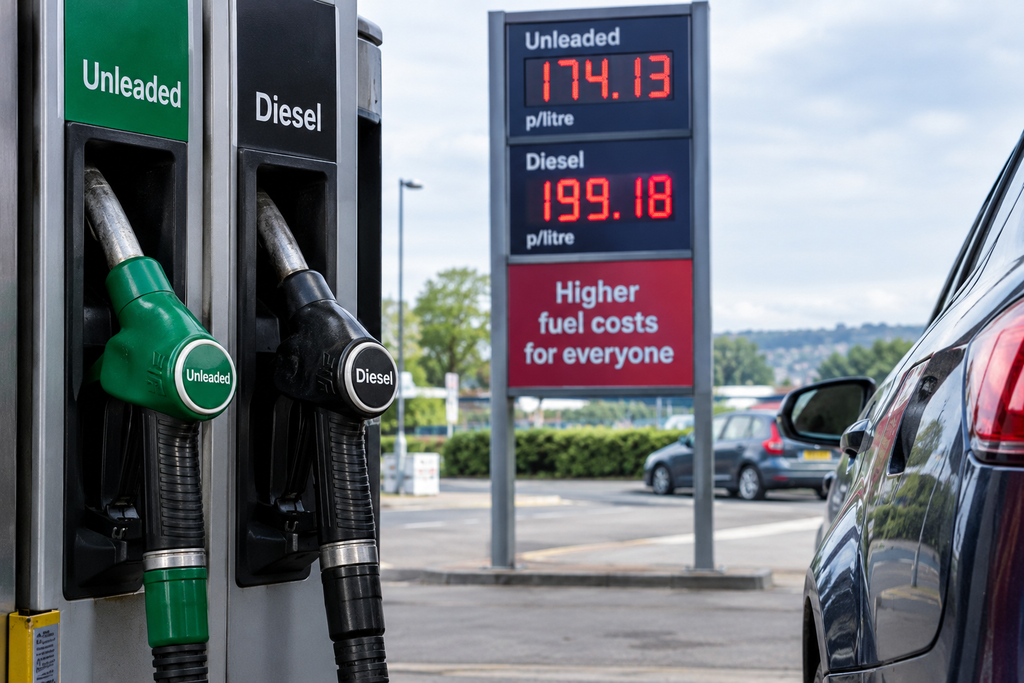
Drivers and businesses face mounting costs as the RAC reports a litre of diesel at an all-time peak of 199.18p, with petrol also climbing.
Diesel has reached the most expensive level ever recorded in the UK, with a litre now averaging 199.18p, according to the RAC. The motoring organisation says the conflict in the Middle East is the main driver.
Breaking the 2022 record
The new figure edges past the previous high of 199.09p, set in June 2022 after Russia’s full-scale invasion of Ukraine. Since the US-Israel conflict with Iran began at the end of February, diesel has risen by 59p a litre, an increase of just under 40%.
Petrol is also on the rise. A litre now costs 174.13p, which is 41p more than before the conflict began, though still well below its 2022 peak.
For motorists, the change is easy to feel. Filling an average family car with diesel now costs about £110, some £31 more than at the start of the war.
“Uncharted territory”
The RAC said diesel had entered “uncharted territory” and described the situation as a reminder of how exposed the UK is to events far from home. Its figures are based on average prices across supermarkets, motorway service stations and independent retailers.
Simon Williams, the RAC’s head of policy, warned that the pain would not stop at the pumps. Anyone buying goods or services that depend on diesel lorries and vans will feel it, he said, and he expects the higher costs to be passed on to consumers.
He added that pump prices will only fall once oil prices stay lower for several weeks, not just a few days.
Oil prices and supply pressures
Brent crude, the global benchmark, rose over the weekend and is trading at around $108 a barrel. It stood at about $73 before the conflict began.
Seven months of war have severely disrupted oil production and transport across the region. Flows of both crude and refined diesel to global markets have been restricted.
Supply has been squeezed from another direction too. Russia, a major diesel producer, has banned exports of the fuel following Ukrainian attacks on its refineries.
Why diesel is different
Several factors make diesel especially vulnerable. It is harder to refine than petrol. It is also relied on heavily by the haulage and agriculture industries, which makes demand very difficult to cut.
The UK’s exposure is sharpened by its dependence on imports. Its four refineries produce more than enough petrol for domestic needs but fall short on diesel.
Fewer diesel vehicles, but still millions
Diesel use is slowly declining. Department for Transport figures show 15.1 million diesel vehicles on UK roads at the end of June, down from 15.7 million a year earlier. Diesel cars fell from 10.4 million to 9.8 million over the same period.
Even so, millions of households and businesses remain directly exposed to the price surge.

