




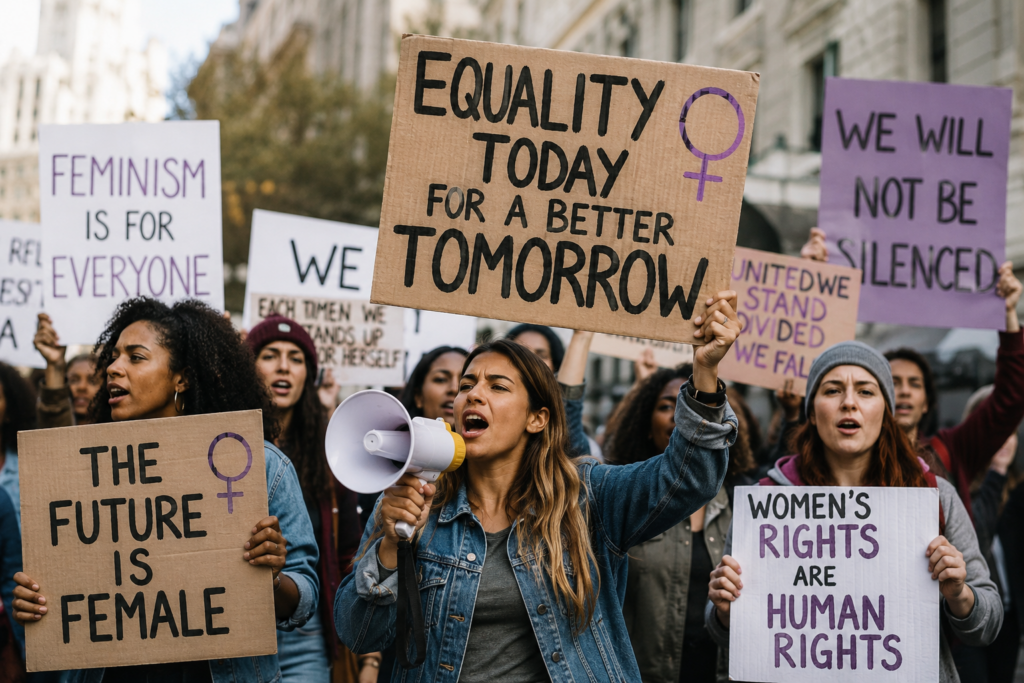
For more than a century, feminism has played a crucial role in challenging inequality and advocating for women’s rights across the world. While significant progress has been made in areas such as education, voting rights, workplace participation, and political representation, the movement continues to evolve as new challenges emerge in modern society.
At its core, feminism is the belief that all genders should have equal rights, opportunities, and treatment. Contrary to common misconceptions, feminism is not about promoting women above men; rather, it seeks to eliminate discrimination and create a society where individuals are valued regardless of gender.
The roots of modern feminism can be traced back to the late nineteenth and early twentieth centuries, when activists fought for women’s right to vote. These efforts led to major political reforms in many countries and laid the foundation for future movements advocating equal access to education, employment, and legal protections.
Today, feminism addresses a broad range of issues. Gender pay gaps, workplace discrimination, domestic violence, unequal representation in leadership positions, and access to healthcare remain concerns in many parts of the world. According to international organizations, women continue to earn less than men on average and remain underrepresented in senior political and corporate roles.
The rise of digital technology and social media has transformed feminist activism. Online campaigns such as #MeToo have amplified the voices of survivors of sexual harassment and assault, encouraging public conversations that were once difficult to have. These platforms have enabled activists to connect globally, share experiences, and advocate for change more effectively than ever before.
Modern feminism has also become increasingly focused on intersectionality, a concept that recognizes that people’s experiences are shaped by multiple factors, including race, ethnicity, socioeconomic status, disability, and sexual orientation. Intersectional feminism argues that achieving gender equality requires understanding how different forms of discrimination overlap and affect individuals differently.
Despite progress, feminism continues to face criticism and resistance. Some argue that gender equality has already been achieved, while others misunderstand the movement’s goals. However, supporters maintain that ongoing disparities in pay, representation, safety, and opportunity demonstrate the need for continued advocacy and reform.
Looking ahead, the future of feminism will likely involve addressing emerging challenges such as online harassment, reproductive rights, artificial intelligence bias, and the impact of economic inequality on women and marginalized communities. As society changes, the movement continues to adapt while remaining committed to its central goal: equality for all.
Feminism has helped shape modern societies by expanding opportunities and challenging long-standing barriers. While the path toward full equality remains complex, the movement’s influence continues to be felt in politics, workplaces, schools, and communities around the world.
References
- United Nations – Gender Equality and Women’s Empowerment reports.
- UN Women – Research and statistics on women’s rights and gender equality.
- World Economic Forum – Annual global gender equality assessments.
- Kimberlé Crenshaw – Foundational work on intersectionality and feminist theory.
- International Labour Organization – Data on gender pay gaps and workplace equality.

