




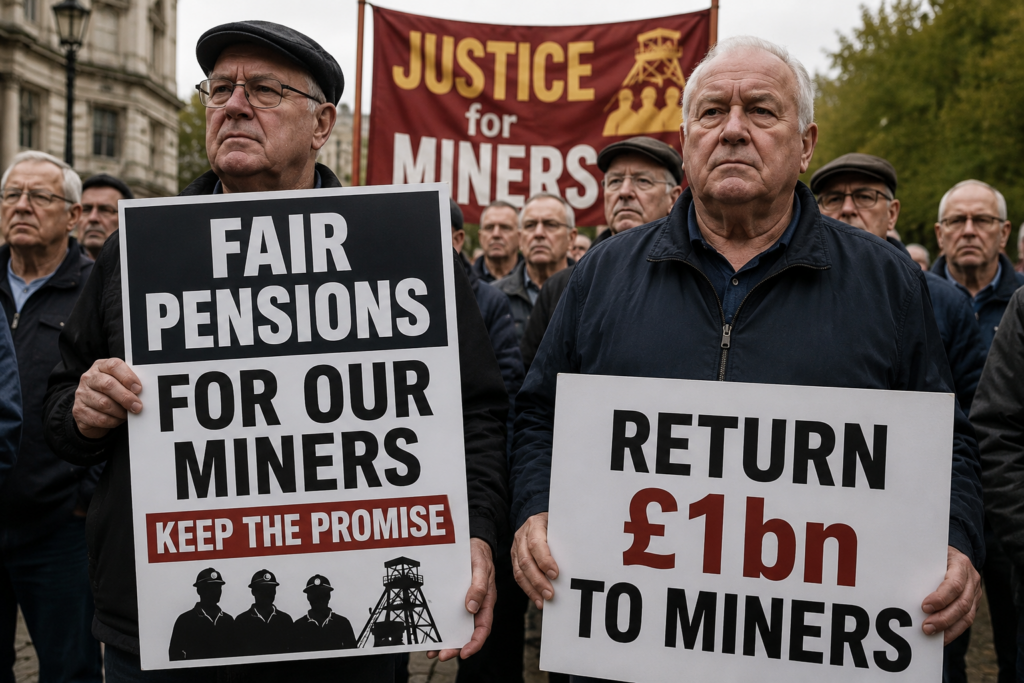
Leadership favourite Andy Burnham previously pledged to ‘keep fighting’ for former workers as trustees push for further surplus release
By Rob White, Senior Money Writer · 23 June 2026
The government is weighing whether to release a further £1bn from the Mineworkers’ Pension Scheme surplus to retired miners, in what would be the second major payout to former colliery workers in under two years — and one that could ultimately leave taxpayers responsible for any future shortfall.
The scheme’s trustees have been lobbying ministers to unlock the additional funds, as well as requesting that all future surpluses flow entirely to members, rather than being shared with the government. They have also called for bonus payments to be linked to inflation — a change that would significantly increase the long-term cost to the state.
The move would build on Labour’s 2024 Budget decision to transfer £1.5bn from a government-held reserve fund to more than 100,000 former miners, boosting their pensions by an average of £29 a week — a 32% increase. A further lump sum averaging £5,500 was paid out to members in December 2025 after payments were backdated.
Background
When British Coal was privatised in 1994, a deal was struck giving the government a 50% share of any profits from the Mineworkers’ Pension Scheme in exchange for acting as guarantor of last resort. The arrangement was not put to members at the time, and sparked a decades-long dispute. Successive governments collected more than £4.7bn from the scheme without ever paying a penny in.
Burnham factor
The question of further payouts has taken on fresh political weight in the context of the Labour leadership race, with Andy Burnham — widely seen as the front-runner — having previously pledged to “keep fighting” for former miners and their families. As Mayor of Greater Manchester, Burnham built much of his political identity around post-industrial communities in the North of England, many of which were devastated by pit closures in the 1980s and 1990s.
Any further disbursement ahead of or during a Burnham leadership would be seen by supporters as fulfilment of a longstanding moral commitment — though critics are already questioning the financial prudence of dismantling the guarantor framework entirely.
The taxpayer risk
Central to the controversy is what happens if the scheme’s surplus evaporates. The 1994 agreement placed the government as guarantor, meaning the state would cover any deficit. The £1.5bn reserve fund that was returned in 2024 was specifically maintained as a buffer against that scenario. With that money now distributed to members, and further releases under discussion, critics warn that taxpayers would be exposed if investment returns sour.
John Ralfe, a pensions consultant, previously cautioned that without a cushion, even a 20% fall in markets could create a deficit the government would be obliged to cover. “Once money leaves the scheme,” he warned, “the only way it goes back is if taxpayers write a cheque.”
The government has disputed that characterisation, citing an independent valuation showing the scheme currently in surplus of more than £1bn. However, opposition MPs have pressed ministers to release the most recent full valuation — requests that have so far gone unmet.
What the trustees are asking for
Release of a further £1bn in undistributed surplus as an additional bonus payment for 2026
100% of future funding surpluses to be directed to members, ending the 50/50 profit-share arrangement
All bonus payments to be linked to inflation, protecting the real value of future payouts
What happens next
The government said last year that it would set out next steps on the profit-sharing review “in the coming months.” That commitment has yet to produce a firm announcement. With leadership speculation intensifying and the trustees pressing their case in meetings with ministers, a decision is increasingly expected before the end of 2026.
Any agreement to end the 32-year profit-sharing arrangement would mark a decisive and permanent shift in the state’s relationship with the scheme — one that campaigners have sought for three decades, but which will raise hard questions about the long-term cost to the public purse.
The Mineworkers’ Pension Scheme currently has approximately 100,000 members. The Department for Energy Security and Net Zero was contacted for comment.

