



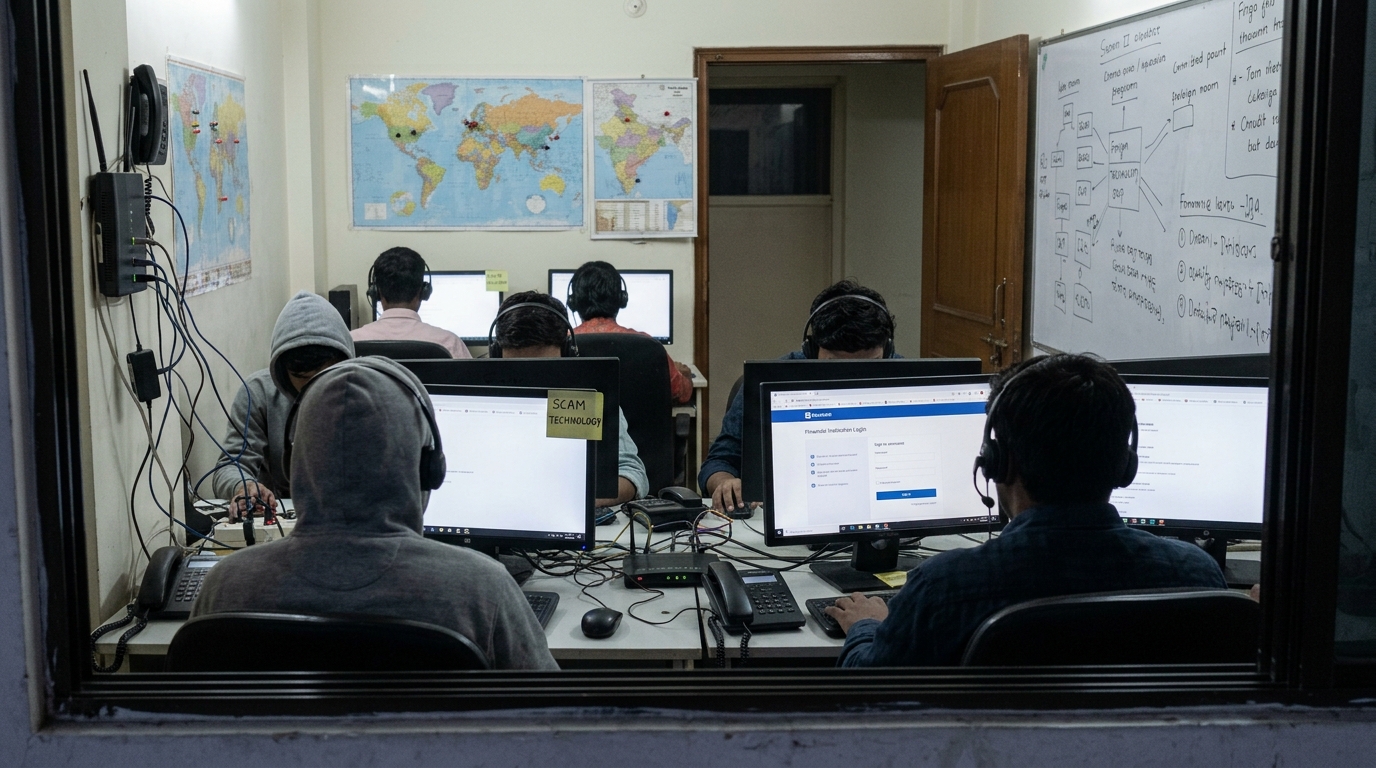

India’s digital technology industry has become a major force in the global economy. But international businesses must remain vigilant about software delivery, contractual transparency and cross-border dispute resolution. Protecting customers is essential to protecting India’s reputation as a trusted technology partner.
By Westferry Times
India’s digital success depends on international trust
India has established itself as a major global technology centre, supplying software development, IT services, digital platforms and technical expertise to businesses around the world.
Its success has been built by talented engineers, entrepreneurs and companies that work hard to deliver genuine value. For many Indian technology businesses, international contracts create employment, encourage investment and provide opportunities to expand into global markets.
However, international business depends on trust as much as technical ability.
When a company commissions software from an overseas supplier, it expects the supplier to honour the agreement, communicate honestly, respect intellectual property rights and deliver a product that meets the agreed requirements.
Where those expectations are not met, the consequences can be serious. Businesses may lose money, miss commercial deadlines, disappoint their own customers and spend additional funds replacing or repairing software that was supposed to be ready for use.
These risks deserve greater attention as businesses increasingly purchase technology services across international borders.
The issue is not whether India is a reliable technology destination overall. Many Indian companies provide excellent services. The issue is how international clients can identify trustworthy suppliers, protect their investments and obtain effective remedies when a serious commercial dispute arises.
The difference between a polished interface and working software
One of the risks in software procurement is that a product may look impressive without delivering the functionality promised.
A website or application can have an attractive interface, professional graphics and convincing demonstrations. Yet the underlying software may be incomplete, poorly integrated or unsuitable for the client’s business requirements.
A functioning product may require working databases, secure authentication, payment integrations, administrative controls, reporting, reliable business logic, testing and deployment procedures.
A visual demonstration alone cannot establish that these functions work.
There is nothing inherently wrong with using purchased code, licensed templates, open-source components or third-party software. These are common practices in modern software development. Problems arise when the delivered product materially differs from the agreed specification, required licences are absent, or important limitations are concealed from the customer.
International clients should therefore ask a fundamental question before making substantial payments:
Am I paying for a design, a partially developed prototype or a fully functioning product that has been tested against my requirements?
These are different deliverables and should be priced, documented and accepted accordingly.
A written specification, independent technical testing and clear acceptance criteria can help prevent expensive misunderstandings.
Why international clients can be vulnerable
A business purchasing software from another country may face an information imbalance.
The customer understands its commercial objectives but may not have the technical expertise to examine the supplier’s code, architecture, integrations or development process. The supplier may have considerably more knowledge about the actual state of the product.
This can make it difficult to assess progress, challenge technical explanations or determine whether a project has been delivered properly.
The risks increase when payments are made upfront, milestones are vague, demonstrations are not independently tested or contractual promises are recorded only in informal messages.
A customer may believe that a project is nearly complete, only to discover later that significant functionality remains unfinished or that further expenditure is needed before the product can be used commercially.
For a small business, these problems can be devastating. A delayed digital product may prevent the launch of a new service, disrupt existing operations or undermine relationships with investors and customers.
The lesson is not to avoid international suppliers. It is to ensure that trust is supported by evidence, contractual protection and independent verification.
The cross-border justice problem
When a commercial dispute arises between businesses in different countries, obtaining a remedy can be more complicated than dealing with a domestic supplier.
A client may need to establish which country’s law governs the contract, which court or dispute-resolution forum has jurisdiction, how proceedings can be served, what evidence is required and whether a judgment can be enforced where the supplier or its assets are located.
These steps can require additional legal costs, specialist advice and considerable time.
For a large corporation, the expense may be manageable. For a small or medium-sized business, the cost of pursuing a claim may approach or exceed the amount in dispute.
This creates a practical concern: a customer may have a genuine complaint but still find it difficult to pursue a proportionate remedy.
However, a failed project or unpaid refund does not automatically establish criminal fraud. Some disputes concern contractual interpretation, technical performance or disagreements about completion. Other cases may involve evidence of deliberate deception or conduct that warrants investigation under applicable law.
International clients should preserve the evidence, obtain appropriate legal advice and identify the correct civil, commercial or criminal reporting route where relevant.
Authorities and dispute-resolution institutions should also continue improving the accessibility and clarity of their procedures for overseas businesses.
Why India’s international reputation matters
India’s technology industry is economically significant.
The Indian Government, citing NASSCOM estimates, reported projected IT-industry revenue of approximately US$283 billion for financial year 2024–25, including around US$224 billion in exports.
These figures demonstrate why international confidence matters to the country’s technology businesses and workforce.
India’s reputation should not be judged by isolated complaints, and allegations against individual suppliers must be assessed fairly. Nevertheless, repeated substantiated cases of misleading commercial practices, poor delivery or inadequate accountability could affect how overseas customers evaluate risk.
Buyers might introduce more extensive technical audits, demand additional guarantees, impose stricter payment conditions or redirect contracts to other markets.
Such decisions could increase costs for responsible Indian companies that have invested in skilled employees, reliable delivery processes and professional standards.
The potential consequences extend beyond individual businesses. International contracts support employment, professional development, investment and opportunities for Indian technology companies to grow.
Protecting the sector’s credibility is therefore a shared responsibility.
Could poor business practices cost billions in opportunities?
The financial consequences of weak commercial trust can extend beyond the value of an individual contract.
Consider a company that spends months developing a digital platform with an overseas supplier. If the project fails to meet its agreed requirements, the customer may have to pay another developer to rebuild or repair it.
The customer may also lose sales, miss a market opportunity, delay hiring or refund payments to its own customers.
If confidence deteriorates, the same business may decide not to commission further work in that market.
These are potential economic effects, not proof that a particular amount has already been lost. Establishing the actual scale would require reliable data on disputes, project failures, customer losses and contracts redirected to other countries.
Nevertheless, the principle is clear: trust encourages international trade, while uncertainty increases its cost.
India’s technology businesses have a strong incentive to demonstrate that their contracts are transparent, their products are properly tested and their customers can obtain fair treatment when things go wrong.
A practical warning: How to protect your business before signing
International clients should take a structured approach before commissioning software from any overseas supplier.
1. Verify the supplier.
Check the company’s legal identity, registration details, business address, relevant experience and professional references. Where possible, speak directly with previous clients about completed projects and after-sales support.
Company registration is an important check, but it does not guarantee technical competence or commercial reliability.
2. Define the deliverables precisely.
The contract should identify the features, integrations, performance requirements, documentation and deployment arrangements included in the price.
Avoid vague descriptions such as “complete software,” “fully automated system” or “ready for business” unless the agreement defines exactly what those expressions mean.
3. Require working demonstrations.
Test actual functionality rather than relying exclusively on screenshots, presentations or front-end designs. For substantial projects, use an independent technical professional to verify the product against the specification.
4. Pay against measurable milestones.
Where commercially appropriate, divide payments into stages linked to demonstrable progress and agreed acceptance tests. Avoid paying the entire amount upfront unless there is a clear commercial reason and suitable protection.
5. Protect intellectual property.
Specify ownership of newly developed code, the treatment of pre-existing materials, third-party licences, source-code access and the customer’s right to modify, maintain and transfer the product.
Do not assume that payment automatically transfers every intellectual property right.
6. Include remedies for failure.
The contract should address defects, missed milestones, additional charges, termination, refunds where applicable, handover obligations and access to the work completed.
7. Agree on the legal framework.
Obtain advice on governing law, jurisdiction, dispute resolution and enforcement. Consider whether mediation or arbitration is appropriate for the value and nature of the transaction.
8. Preserve the evidence.
Keep signed agreements, invoices, bank records, specifications, demonstrations, messages, source-code delivery records and technical reports. If a dispute arises, these materials may be essential to establishing what was promised and what was delivered.
9. Investigate serious concerns promptly.
If there is evidence suggesting deliberate deception, unauthorised use of intellectual property or another potential offence, obtain specialist advice about the appropriate reporting process. Make factual complaints and avoid unsupported public accusations.
What should the Indian authorities and technology industry do?
The solution is not to discourage foreign investment or unfairly stigmatise Indian technology companies. It is to strengthen confidence through fair enforcement, transparency and practical safeguards.
Authorities should make it easier for domestic and overseas customers to understand how to report suspected wrongdoing and which remedies may be available.
Credible complaints should be assessed on their evidence. Where conduct falls within the criminal law, the appropriate authorities should investigate in accordance with applicable procedures. Contractual disputes should have accessible and proportionate routes to resolution.
Industry associations and technology businesses can also help by promoting clearer project specifications, independent software testing, transparent licensing, recognised quality standards and professional customer-service practices.
Better data on commercial disputes and their resolution would help policymakers identify recurring problems without assuming that every complaint is justified.
Above all, honest businesses should be encouraged to distinguish themselves through documented delivery standards, reliable references, transparent contracts and a willingness to address legitimate customer concerns.
International clients should be cautious, not fearful
India remains an important destination for technology services, and many clients will continue to benefit from working with Indian developers and companies.
The sensible response to commercial risk is not to reject an entire country or industry. It is to apply consistent standards to every supplier, wherever that supplier is located.
A company that can demonstrate its technical ability, communicate openly, honour its contractual obligations and resolve disputes fairly deserves the opportunity to compete internationally.
A supplier that cannot provide credible evidence of its capabilities should not be trusted with a substantial project merely because its presentation is persuasive or its price is attractive.
International buyers should make decisions based on verifiable performance, clear contractual commitments and appropriate safeguards.
Conclusion: Trust is India’s most valuable technology export
India’s technology sector has created substantial international opportunities and supports businesses, professionals and communities across the country.
Protecting that achievement requires more than technical talent. It requires integrity, transparency, accountability and effective remedies when commercial relationships break down.
For international customers, the message is simple: verify before paying, define before signing, test before accepting and preserve evidence if a dispute arises.
For India’s technology industry, the opportunity is equally clear. Stronger standards and fairer dispute resolution can protect reputable businesses, reassure overseas customers and help ensure that commercial misconduct, where established, does not undermine the wider sector.
The future of international technology trade will depend not only on what companies can build, but also on whether customers can trust them to deliver what they promise.

