




Increase in Line with 4.1% Wage Growth Looks Set for April — But Could a Tax Penalty Take the Shine Off?
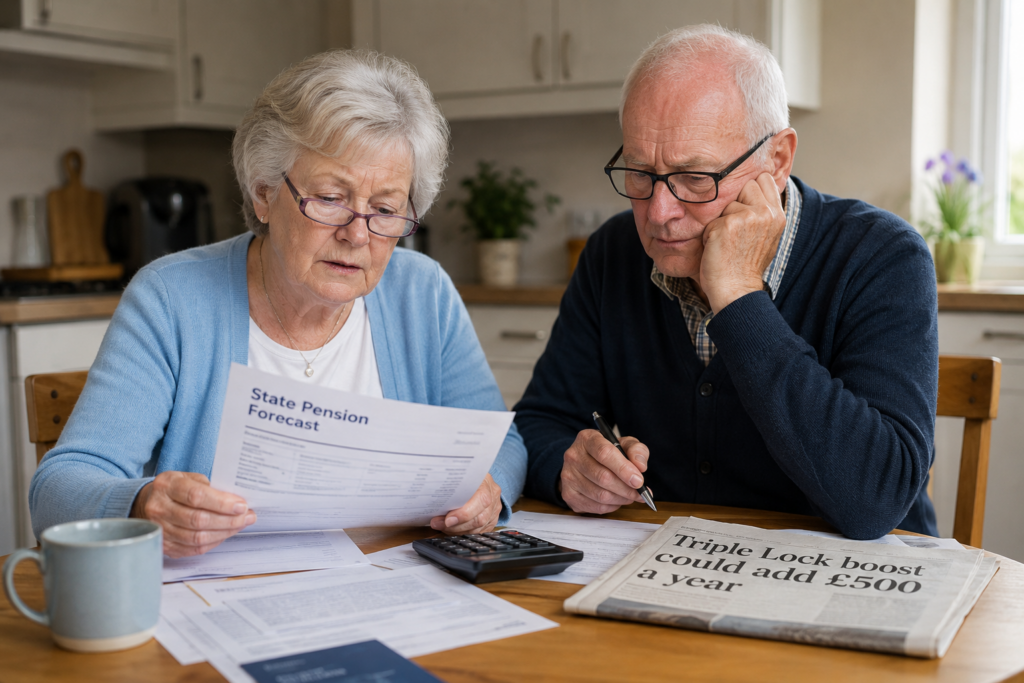
State pensioners are on course for one of the more generous triple lock increases in recent years, with early figures pointing to a rise of around £500 a year from April 2027. But for a growing number of retirees, part of that gain could be quietly clawed back by frozen tax thresholds.
What the Triple Lock Promises
Introduced in 2011, the triple lock guarantees that the state pension rises each April by whichever is highest of three measures: average wage growth, CPI inflation, or a flat 2.5%. The mechanism has proved expensive but effective, pushing pension payments up far faster than they would have risen under inflation alone.
This year’s rise is expected to be driven by wages rather than prices. Consumer Price Index data for April to June 2026 points to inflation of around 4.1%, and early wage growth figures are running at a similar level — some estimates put it as high as 4.2%. The figure that actually counts, however, is average earnings growth for May to July 2026, due to be published by the Office for National Statistics in September, which will be used to set next April’s increase.
What It Means in Pounds and Pence
If wage growth holds at 4.1%, the full new state pension — currently £241.30 a week, or £12,547.60 a year — would rise by roughly £514 to about £251.20 a week, taking annual payments above £13,000 for the first time. Pensioners on the older, pre-2016 basic state pension would see a smaller cash rise, with payments climbing from £184.90 to around £192.50 a week.
Steve Webb, a former pensions minister now at consultants LCP, has said it is highly likely that earnings growth will end up determining next year’s increase, and that pensioners on the new state pension can reasonably expect an increase of around £500 a year from next April, barring a sharp change in the coming weeks.
Prime Minister Andy Burnham has already confirmed the government intends to honour the triple lock in October’s Budget, in line with Labour’s manifesto commitment.
The Tax Catch
The rise is not without complications. The income tax personal allowance has been frozen at £12,570 since 2021, and successive governments have chosen not to unfreeze it. With the full new state pension already close to that threshold, a further increase of roughly £500 would push many pensioners’ incomes right up against — or over — the point at which other income, such as a workplace or private pension, tips them into paying income tax.
This process, often referred to as fiscal drag, means that even though the headline increase to the state pension is a win for retirees, a portion of that gain risks being absorbed by tax that pensioners would not previously have paid. Financial commentators have flagged this as an increasingly pressing issue as the state pension itself edges closer to the frozen personal allowance with each successive triple lock rise.
What Happens Next
The final decision on next year’s increase will not be confirmed until the Work and Pensions Secretary sets it out around the time of the Budget, once official earnings figures for May to July are published in September. Should wage growth ease in that period, the increase would fall — though never below the 2.5% floor guaranteed by the triple lock. Should it climb further, pensioners could see an even bigger boost than currently forecast.
Source: The Times, 18 August 2026

