




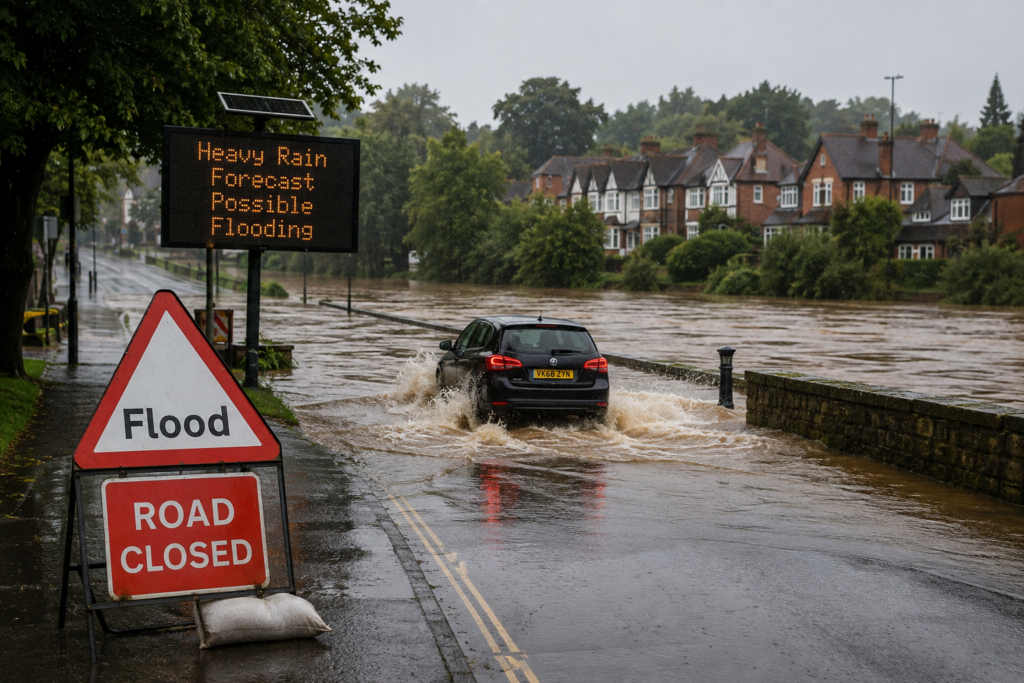
Water Firms Continue to Ask Customers to Restrict Use as “First Meaningful Rain for a Long Time” Is Forecast
Floods and drought look set to hit the UK simultaneously this week, as heavy rain is forecast to fall on ground so parched it may struggle to absorb it. While parts of the country are due their first meaningful rainfall in weeks, forecasters and water companies are warning it will do little to reverse the drought conditions that have strained wildlife, farmers, firefighters and water supplies across much of the country.
A Shift in the Weather
The summer’s fifth heatwave is now giving way to cooler, wetter conditions closer to the seasonal norm, according to the Met Office. Deputy chief forecaster Mike Silverstone said showers were expected across the north of the UK, particularly the north-west, with a further band of rain moving into the south-west by evening and spreading east across the south through the following days. Thursday is expected to bring heavy showers to much of the country, though not every area will be hit.
Because the rain is falling on ground baked hard by weeks of dry weather, Silverstone warned some of the more intense showers could trigger surface water flooding even as the underlying drought persists.
Supplies Still Under Strain
The rainfall may offer some relief to firefighters battling wildfires and to drought-stricken land, but water shortages are expected to continue regardless. South East Water has told customers in Kent to restrict use to essential purposes only, after supplies to around 8,000 customers failed on Monday. The company said storage tank levels remained “critically low” on Tuesday, despite restoring supplies to more than 7,000 homes in Herne Bay, Rough Common and Blean; roughly 400 homes were still without water.
A spokesperson for the Department for Environment, Food and Rural Affairs said the situation was “simply not good enough,” calling on South East Water to move faster to cut leaks and follow its drought plans so supplies are not disrupted even in the driest conditions. South East Water became the first company to impose a hosepipe ban this summer, introducing restrictions in parts of Kent on 3 July.
Wessex Water has since followed suit, announcing its first hosepipe ban since 1976, covering 1.4 million customers across Bath, Somerset, Dorset and Wiltshire. The company pointed to a combination of rising demand during the dry spell and longer-term forecasts requiring it to safeguard resources for both customers and the environment.
Reservoirs Running Low
Environment Agency data released last week showed five of England’s major reservoirs are now classed as “exceptionally low,” and the National Hydrological Monitoring Programme has warned that low supplies are likely to persist into autumn.
Thames Water has also urged customers to keep limiting their water use. The company said household demand had fallen 3% across London and more than 6% across the Thames Valley and home counties since it introduced a hosepipe ban on 23 July, but rainfall across its catchment area in July came to less than 1mm — just 2% of the long-term average — while daily demand ran around 100 million litres above normal. London’s reservoir storage now stands at 74%, well below what would be expected for the time of year.
Thames Water’s director of water, Martin Padley, said reservoir levels remained below where they should be for this time of year, with demand still high, and repeated the call for customers to keep using only what they need.
Weeks of Rain Needed to Recover
Liz Stephens, professor of climate risk and resilience at the University of Reading, said it would take a sustained period of rainfall for rivers, reservoirs and vegetation to recover. She noted that the south-east remains roughly a month’s worth of rain short of what would normally be expected by this point in the year, despite heavy rainfall back in January and February.
Stephens said this week’s rain may ease the immediate wildfire risk but stressed that only weeks of continued rainfall would allow the landscape to properly recover, meaning hosepipe bans are likely to remain in place for some time. She also warned that flooding remains possible during drought conditions, and can even become more likely, as hardened soil struggles to absorb rainfall quickly enough.
Source: The Guardian, 18 August 2026

