




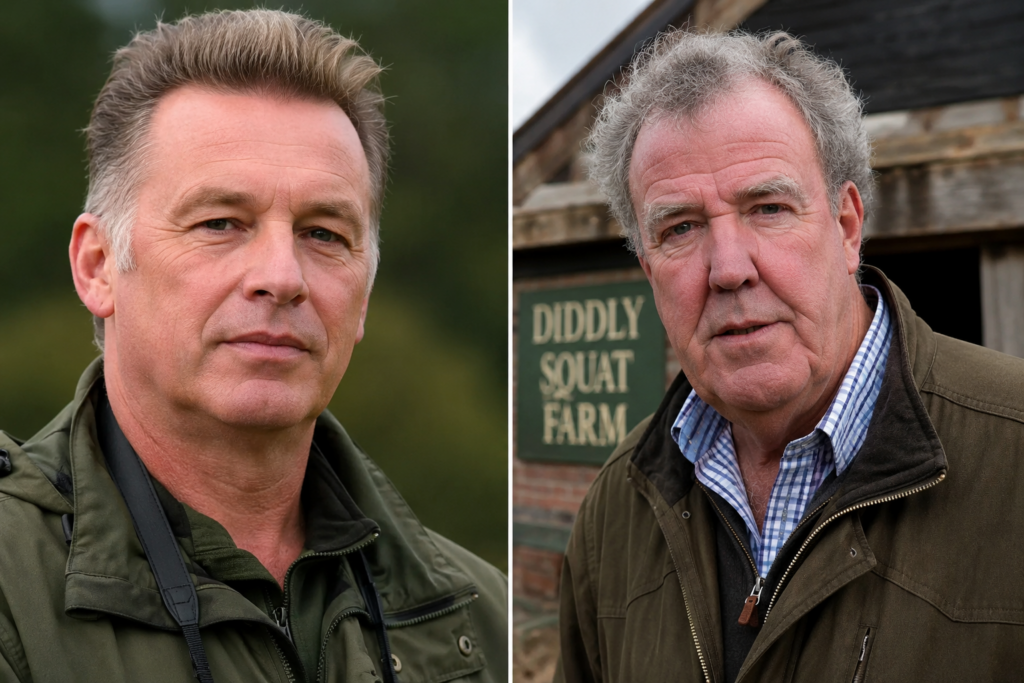
Chris Packham has reignited his long-running feud with Jeremy Clarkson, accusing the former Top Gear presenter of portraying an unrealistic picture of modern British farming through his hit series Clarkson’s Farm.
The latest exchange comes after Packham described Clarkson as an “agitator” while discussing their very different approaches to farming, wildlife and environmental issues.
Packham Takes Aim at Clarkson’s Farming Image
Packham, best known for programmes including Springwatch and The Really Wild Show, has been a vocal critic of intensive farming and agricultural practices that he believes can damage wildlife and the environment.
Clarkson, meanwhile, has turned his experiences running Diddly Squat Farm in the Cotswolds into the hugely popular Prime Video series Clarkson’s Farm.
Packham previously criticised the programme while appearing on Celebrity Gogglebox, arguing that the opening imagery presented an overly idealised version of farming.
He claimed that the reality of many farms was very different, pointing to monocultures, pesticide use, fertiliser and intensive livestock practices.
Despite his criticism, Packham said he understood what Clarkson was trying to achieve.
“He’s an agitator,” Packham said, adding that he respected Clarkson because his provocative approach was similar in one respect to his own efforts to encourage public discussion and change.
Clarkson Hits Back
Clarkson was quick to respond after Packham’s earlier comments, reminding his followers that the conservationist had previously visited Diddly Squat Farm.
According to Clarkson, Packham spent a day at the farm in 2012 foraging and bird watching, before later criticising the way farming was portrayed on television.
Clarkson argued that Packham’s description did not reflect his experience of the farm, sarcastically suggesting that he would have noticed if animals were being kept in the conditions Packham described.
The dispute continued on social media, with Packham posting statistics concerning animal welfare, pesticide use and habitat destruction alongside another pointed question aimed at Clarkson.
Clarkson Later Admits He Went Too Far
The heated exchange eventually took an unexpected turn when Clarkson appeared to acknowledge that his response had been overly aggressive.
He said he had been angered by Packham’s remarks and had immediately responded in his newspaper column, but later admitted that, in an era of greater tolerance and respect, he should have held back.
That moment appeared to briefly lower the temperature between the two television personalities, although Packham has now returned to the subject with further criticism.
Packham Says Clarkson’s Farm Is “Unrealistic”
Packham’s latest comments go further than simply criticising Clarkson’s Farm.
Speaking about the programme, he argued that it presents “an entirely unrealistic image of most of UK farms” and claimed that industrial farming interests benefit from the wholesome image associated with Clarkson’s show.
He said the debate was ultimately about more than Clarkson himself, arguing that issues surrounding farming affect animal welfare, wildlife, human health and the environment.
Packham also insisted that criticism of his position would not stop him from raising the issues he believes need greater public attention.
A Feud That Keeps Coming Back
The disagreement between Packham and Clarkson reflects a much wider debate over the future of British farming.
Clarkson’s television series has brought the difficulties of running a modern farm to a huge audience, highlighting everything from unpredictable weather and bureaucracy to financial pressures and disputes with local authorities.
Packham approaches the subject from a conservation and environmental perspective, frequently challenging farming practices that he believes harm wildlife and ecosystems.
For now, the two remain firmly on opposite sides of the argument. But despite the personal jabs and public exchanges, both men have succeeded in keeping farming — and the complicated questions surrounding how Britain produces its food — firmly in the public conversation.

