



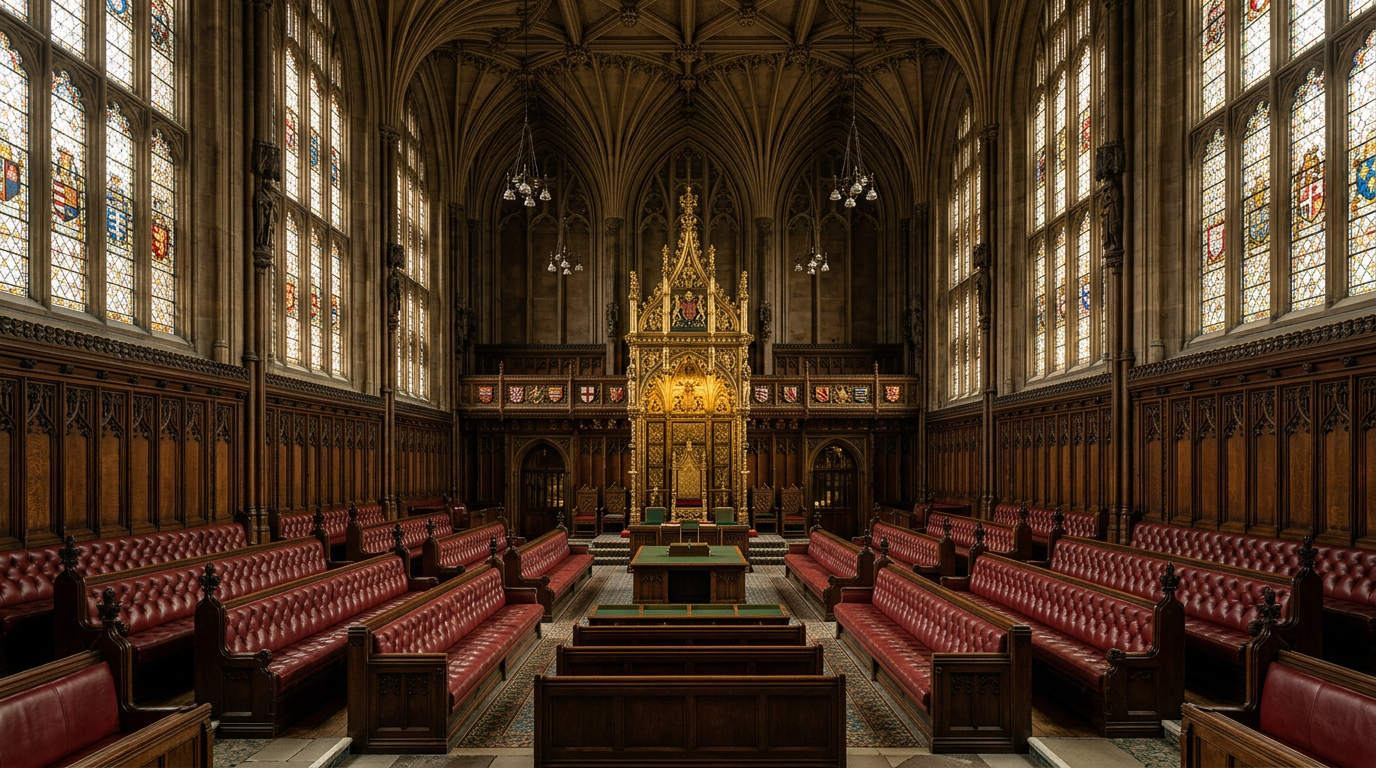

What is the King’s Speech? It is the address the monarch reads at the State Opening of Parliament to set out the government’s plans for a new parliamentary session. The King delivers it, but ministers write every word, and it lists the bills the government hopes to pass over roughly the next year. Afterwards, MPs and peers debate it for several days, and the debate ends in a Commons vote that works as an early test of the government’s authority.
As of October 2026, the most recent King’s Speech was delivered on 13 May 2026, opening the second session of the Parliament elected in July 2024. This guide explains how the occasion works, what happens after it and why it matters.
What is the King’s Speech?
Formally known as the Speech from the Throne, the King’s Speech marks the formal start of a session of Parliament. According to the Institute for Government (IfG), neither the Commons nor the Lords normally does any substantive business until it has been delivered. It was called the Queen’s Speech until the death of Queen Elizabeth II in September 2022.
Although it is read by the King, the speech is a government document. Ministers decide what goes in it, and the monarch reads it in a neutral tone. MPs and peers are generally expected to listen in silence. The text usually names the main bills ministers plan to introduce and closes with a reference to “other measures”, a catch-all phrase that leaves the government free to bring forward legislation it has not named. The speech can also mention state visits planned for the year and foreign heads of state who have been invited to Britain.
How often is there a King’s Speech?
There is no fixed date. A speech takes place whenever a new session begins, and because sessions usually last about a year, most years have one. The gap can be much longer, though. The first session after a general election is often extended: there was no speech in 2011 or 2018, and none in 2025, because the session that began after the July 2024 election ran for almost two years.
When Commons Leader Alan Campbell announced the 2026 date to MPs in March, AJ Bell’s news service reported that the outgoing session would have lasted about 22 months. Before a new session can begin, the old one is closed through prorogation, and the short break is used for logistical and security preparations at Westminster.
What happens at the State Opening of Parliament?
The State Opening is the only occasion when the Sovereign, the House of Lords and the House of Commons come together, as LBC’s explainer notes. Much of the ceremony is centuries old, and each part carries a symbolic meaning:
- The search: the Yeomen of the Guard carry out a ceremonial search of the basement of the Palace of Westminster, a custom linked to the Gunpowder Plot.
- The procession: the King travels from Buckingham Palace by carriage, enters through the Sovereign’s Entrance and puts on the Imperial State Crown and the Robe of State in the Robing Room.
- The Royal Gallery: the procession passes through the Royal Gallery, which typically holds around 600 guests, to the throne in the House of Lords.
- Black Rod: an official known as Black Rod is sent to summon MPs. The door of the Commons chamber is shut in their face, and Black Rod must knock three times before being let in. The ritual dates from the Civil War and symbolises the independence of the Commons from the Crown.
- MPs at the Bar: MPs then walk to the Lords and stand at the Bar of the House to hear the speech.
- The palace whip: by tradition, a government whip, usually the Vice-Chamberlain of the Household, stays at Buckingham Palace while the King is at Parliament.
The speech itself has no fixed length, but precedent suggests it lasts about 10 minutes. On 13 May 2026 the royal procession was due to leave the palace just before 11am, with the speech read from 11.30am.
If the monarch cannot attend, the speech can be read on their behalf. In May 2022 the then Prince of Wales read it for Queen Elizabeth II, with Prince William also present, because counsellors of state must act in pairs.
What happens after the King’s Speech?
Two bills that will never become law
Once MPs return to their chamber, the Speakers of both Houses formally report the speech and order its text to be printed. Each House then gives a symbolic first reading to a bill that is never meant to pass: the Outlawries Bill in the Commons and the Select Vestries Bill in the Lords.
The debate on the Loyal Address
The main business is a debate on a motion thanking the King for his speech, known as the Loyal Address or Humble Address. In the Commons, two government backbenchers propose and second the motion, the Leader of the Opposition replies and the Prime Minister responds. On 13 May 2026 the Commons debate was scheduled to start at 2.30pm on the day of the speech, with the Lords following at 3.30pm.
In recent years the Commons debate has run over six sitting days. Each day after the first has a theme, usually chosen by the Leader of the Opposition. The Lords hold themed days too.
More Read
Amendments and the final vote
Under Commons standing orders, amendments to the address can be debated only on the last two days. The Speaker can select up to four: one, usually from the official opposition, on the penultimate day, and up to three more on the final day. The Lords customarily hold no vote at the end of their debate, so they cannot amend or reject the address.
The Commons vote matters because defeat has historically been treated as a loss of confidence in the government. That is rare, since governments usually command a majority. The last time it happened was in 1924, when Stanley Baldwin’s minority government was defeated and he resigned. Amendments can still shape policy without a defeat: in 2017 the government changed its position on abortion services for women from Northern Ireland before a cross-party amendment tabled by Stella Creasy was put to a vote.
Other business carries on, with limits
While the address is being debated, ministers can still make statements, answer questions and introduce bills. But some business must wait. Ways and means motions cannot be taken until the debate ends, which means a Budget cannot be held during it. Westminster Hall debates also wait until the debate is over.
What happens to the bills announced in the speech?
After the State Opening, the government introduces its bills one by one. Each must be passed by both the Commons and the Lords before it can become law. Bills that have not cleared both Houses when a session ends normally fall and must start again, unless special arrangements are made. One such arrangement is a carry-over motion. The Representation of the People Bill, which would lower the voting age to 16, is an example: it had not passed when Parliament was prorogued at the end of April 2026, so the government arranged for it to continue into the new session.
The speech is a statement of intent. The “other measures” wording lets the government bring forward bills it did not name, and bills that run out of time in a session fall unless they are carried over. Our earlier guide to the assisted dying Bill’s return to Parliament shows how a single bill’s journey through both Houses can stretch over many months.
Why the King’s Speech matters
For anyone following a particular policy, the King’s Speech is the clearest single signal of what the government intends to legislate on and in roughly what order. For the opposition, it sets the terms of the debate for the year ahead. And for the government, the vote on the address is a public show of whether it can carry the Commons.
Its political setting can matter as much as its content. The May 2026 speech came days after heavy Labour losses in the local and devolved elections and was drawn up under Sir Keir Starmer. Andy Burnham, who became Prime Minister on 20 July 2026 according to his GOV.UK profile, has since set out his own priorities in speeches and statements.
Frequently asked questions
Who writes the King’s Speech?
The government writes it. The King reads the text prepared by ministers and delivers it in a neutral tone.
How long does the King’s Speech last?
There is no set length, but precedent suggests about 10 minutes. The royal procession to Parliament sets off before the speech, so the full ceremony lasts longer.
Why is the door slammed on Black Rod?
The ritual dates from the Civil War and symbolises the Commons’ independence from the monarch. Black Rod has to knock three times before MPs agree to follow to the Lords.
When was the last King’s Speech?
As of October 2026, the most recent was on 13 May 2026. The one before that was on 17 July 2024, shortly after the general election.
Can MPs vote down the King’s Speech?
Yes. The Commons can defeat the motion on the address, which has traditionally been treated as a loss of confidence in the government. It last happened in 1924.
Sources: Institute for Government, King’s Speech explainer (accessed 28 October 2026); LBC, What is the State Opening of Parliament and how often does it happen? (13 May 2026); LBC, When is the King’s Speech and how long is it? (13 May 2026); AJ Bell, King’s speech with UK government’s agenda set for May 13 (26 March 2026); SLCC, Date announced for the King’s Speech (13 April 2026); Full Fact, Government tracker: votes for 16 and 17-year-olds (updated 24 September 2026); GOV.UK, The Rt Hon Andy Burnham MP (accessed 28 October 2026).

