



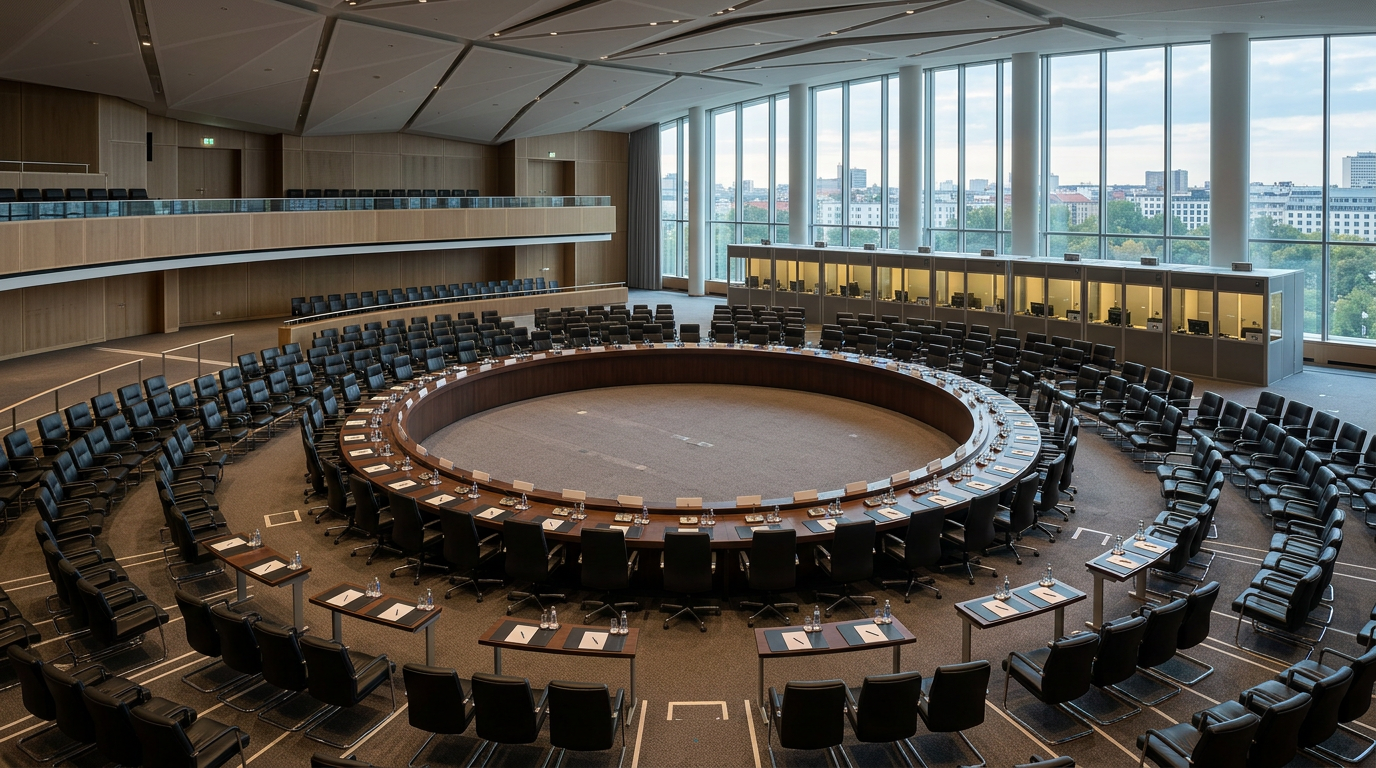

The G20, or Group of Twenty, is the main forum where the world’s largest economies meet to coordinate on the global economy. So what is the G20 in practice? It brings together 19 countries plus the European Union and the African Union, which between them produce roughly 85% of world GDP and more than three-quarters of international trade. As of October 2026, the United States holds the rotating presidency, and the United Kingdom takes over for 2027, with a leaders’ summit planned for Manchester in November 2027.
This guide explains who is in the G20, how the group actually works without a headquarters, and what the UK’s year in charge will involve.
What is the G20?
Australia’s Department of Foreign Affairs and Trade describes the G20 as the premier forum for international economic cooperation, working on major global economic challenges and on the shape of international economic governance. It was set up in 1999 in response to the Asian financial crisis of 1997–98 and has met every year since. Annual summits of heads of state and government have been held since 2008.
The UK last hosted a G20 leaders’ summit in London in 2009, during the global financial crisis. The Manchester meeting in 2027 will be the first on British soil since then.
Unlike the United Nations or the World Trade Organization, the G20 is not a formal international organisation. It describes itself as an informal political forum, with no permanent secretariat. Its influence comes from who sits at the table: the governments around it are responsible for most of the world’s economic output and trade, so what they agree to pursue together can carry well beyond the summit room.
Which countries are in the G20?
As of October 2026, the G20 has 21 members: 19 national economies and two regional blocs. They are:
- Africa: South Africa, plus the African Union as a bloc
- Americas: Argentina, Brazil, Canada, Mexico, the United States
- Asia and the Pacific: Australia, China, India, Indonesia, Japan, South Korea
- Europe: France, Germany, Italy, Russia, the United Kingdom, plus the European Union as a bloc
- Middle East: Saudi Arabia, Türkiye
The name is slightly misleading, then: there are more than 20 seats at the table once the two blocs are counted. The African Union’s place means that, alongside South Africa, the continent as a whole is represented in G20 discussions.
How much of the world does the G20 represent?
Official descriptions agree that members account for around 85% of global GDP and more than 75% of world trade. Figures for population differ depending on who is counting. A members page published under Türkiye’s past G20 presidency puts the share at about two-thirds of the world’s people, while Australia’s foreign ministry, which includes the African Union in its list, gives a figure of around 80%.
How the G20 works
A presidency that rotates every year
Each year one member holds the G20 presidency. The rotation is designed to keep a regional balance over time. The country in charge organises the agenda in consultation with the other members and hosts the year’s main meetings. South Africa held the presidency in 2025, the United States holds it in 2026 and the UK holds it in 2027.
The troika and the missing secretariat
Because the G20 is an informal political forum, it has no permanent secretariat. Continuity comes instead from a “troika” made up of the current, previous and next presidencies, which work together so that priorities do not reset entirely each year. During 2027 that means the UK working alongside the United States, which hands over the presidency, and the member that follows.
Two main strands of work
Most G20 business happens long before leaders arrive. The year is filled with ministerial meetings, working groups, special events and meetings of “sherpas”, the senior officials who prepare the ground for their heads of government. Alongside this runs a finance track, in which finance ministers and central bank governors meet. Under the UK presidency, HM Treasury says the finance track will look at how AI affects growth and jobs, at economic resilience and at support for developing economies.
What the G20 produces
The headline output of each year is a leaders’ declaration agreed at the summit; South Africa’s, for example, was released on 22 November 2025. Because the G20 is an informal forum rather than a treaty body, these declarations are statements of shared intent, not international law. Whether they change anything depends on what member governments then do.
More Read
The UK’s G20 presidency in 2027
Leaders meeting at the G20 summit in Johannesburg in November 2025 confirmed that the UK would lead the group in 2027, after the United States in 2026. According to ITV News, the presidency passes to the UK after the US-hosted leaders’ summit at the Trump National Doral resort near Miami in December 2026, and runs for a year.
Here is what has been announced so far, as of October 2026:
- Leaders’ summit: Manchester Central convention centre, a former railway station in the city centre, on Saturday 27 and Sunday 28 November 2027.
- Finance ministers and central bank governors: Edinburgh, on 8 and 9 July 2027, according to HM Treasury.
- Other events: further G20 meetings are expected at locations across the UK during the year.
- Priorities: the government says it will publish its presidency priorities in early 2027.
Some early signals have already been given. In a statement on 15 October 2026, HM Treasury said the Chancellor wants to use the finance track to advance work on artificial intelligence and its economic effects, and that the Prime Minister has pointed to AI as one of the global challenges the UK will push on during its year as host. Ministers have also said the government’s AI Economics Institute will support international research during the presidency.
Invitations will go to every G20 member. Reports in September 2026 said that would include the leaders of the United States, China and Argentina, and Russia, despite the strains caused by its invasion of Ukraine. First Secretary of State Louise Haigh described the Manchester summit as “a moment of real pride for the whole of the UK”, while campaigners such as the ONE Campaign have urged the government to focus its year in charge on economic opportunity and better health for everyone.
Why the G20 matters beyond the summit headlines
For readers in South Asia, the Middle East and Africa, the G20 is one of the few top-table forums where their own governments sit alongside the United States, China and the EU. India, Indonesia, Saudi Arabia, Türkiye, South Africa and the African Union all have a seat, and the group mixes large advanced economies with major emerging ones. The UK has already said that support for developing economies will be one strand of its finance-track work in 2027.
The G20 also has clear limits. It cannot compel members to act, and agreement among such a varied group can be hard to reach when relations between major powers are strained. Those tensions can show up in who attends: in February 2025, Westferry Times reported that the US secretary of state planned to skip a G20 meeting in South Africa. Even so, the forum remains one of the few places where all of these governments meet regularly.
Frequently asked questions
How many members does the G20 have?
As of October 2026 it has 21 members: 19 countries plus the European Union and the African Union.
Who holds the G20 presidency in 2026 and 2027?
The United States holds it in 2026. The United Kingdom takes over for 2027, after the US-hosted leaders’ summit in December 2026.
When and where is the 2027 G20 summit?
The leaders’ summit is due to take place at Manchester Central on 27 and 28 November 2027. G20 finance ministers and central bank governors are due to meet in Edinburgh on 8 and 9 July 2027.
Are G20 decisions legally binding?
No. The G20 is an informal forum, so its declarations are statements of shared intent rather than treaties. They matter only if member governments act on them.
Does the G20 have a headquarters?
No. It has no permanent secretariat. The country holding the presidency organises the year’s work, supported by the previous and next presidencies in the troika.
Sources: HM Treasury, Chancellor says it is my job to protect resilience of the UK economy (15 October 2026); Australian Department of Foreign Affairs and Trade, G20 (accessed October 2026); G20 Türkiye presidency, G20 members (accessed October 2026); ITV News, Manchester to host world leaders at G20 international summit in 2027 (22 September 2026); Manchester’s Finest, Manchester to host world leaders for G20 Summit in 2027 (22 September 2026); ONE Campaign, UK G20 presidency in 2027 must put people and planet first (22 November 2025).

