


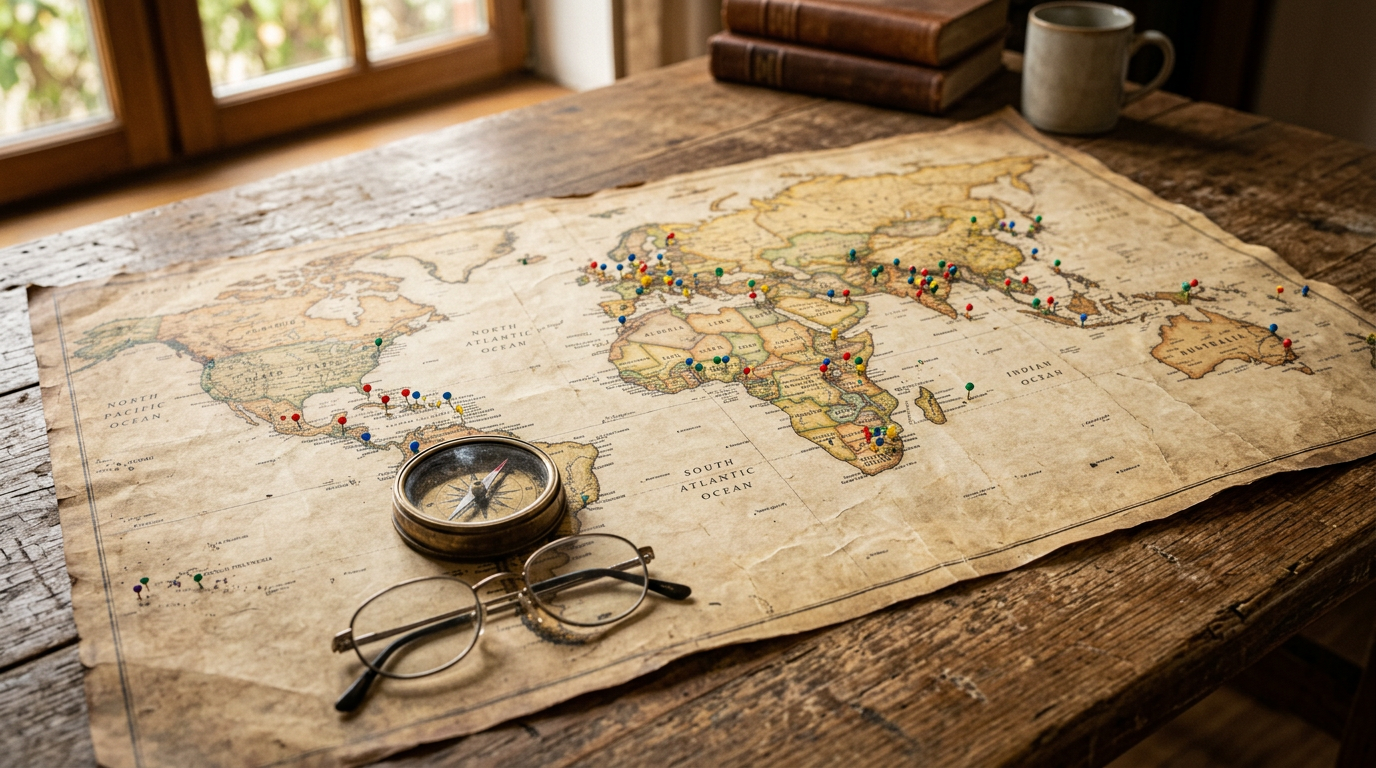

What is the Commonwealth? It is a voluntary association of 56 independent and equal countries, home to around 2.7 billion people, that work together on shared goals such as democracy, development and trade. As of October 2026 its members stretch across Africa, Asia, the Caribbean and Americas, Europe and the Pacific. King Charles III is Head of the Commonwealth, but most members are not monarchies, and membership does not mean being ruled from London.
With Commonwealth leaders due to meet in Antigua and Barbuda from 1 to 4 November 2026, this guide sets out who the members are, how the organisation works and how a country joins or leaves.
What is the Commonwealth and where did it come from?
The modern Commonwealth dates from the London Declaration of April 1949, agreed by the leaders of eight countries: Australia, Britain, Canada, Ceylon (now Sri Lanka), India, New Zealand, Pakistan and South Africa. According to the Commonwealth Secretariat, the declaration let India become a republic while staying a member, with the King as Head of the Commonwealth rather than India’s head of state, and it dropped the word “British” from the association’s name. India became a republic in January 1950.
Nearly all members were once under British rule, but that is no longer a requirement. Rwanda joined in 2009, and Gabon and Togo, both former French colonies with no historic link to the Commonwealth, were admitted in June 2022.
Which countries are in the Commonwealth?
The Commonwealth Secretariat lists 56 member countries, grouped by region:
Africa (21)
Botswana, Cameroon, Eswatini, Gabon, The Gambia, Ghana, Kenya, Lesotho, Malawi, Mauritius, Mozambique, Namibia, Nigeria, Rwanda, Seychelles, Sierra Leone, South Africa, Tanzania, Togo, Uganda and Zambia.
Asia (8)
Bangladesh, Brunei Darussalam, India, Malaysia, Maldives, Pakistan, Singapore and Sri Lanka.
Caribbean and Americas (13)
Antigua and Barbuda, The Bahamas, Barbados, Belize, Canada, Dominica, Grenada, Guyana, Jamaica, Saint Lucia, St Kitts and Nevis, St Vincent and the Grenadines, and Trinidad and Tobago.
Europe (3)
Cyprus, Malta and the United Kingdom.
Pacific (11)
Australia, Fiji, Kiribati, Nauru, New Zealand, Papua New Guinea, Samoa, Solomon Islands, Tonga, Tuvalu and Vanuatu.
Members range from some of the world’s largest and richest countries to some of its smallest and poorest. Thirty-three of them are small states with populations of 1.5 million or less, out of 42 such states worldwide. The Secretariat says more than 60% of people in Commonwealth countries are aged 29 or under.
Is the King head of state of all Commonwealth countries?
No, and this is one of the most common misunderstandings. Being Head of the Commonwealth is a separate role from being a country’s head of state. The Secretariat describes the headship as largely symbolic, with no fixed term, and says it is not hereditary: future Heads will be chosen by Commonwealth leaders.
Among the 56 members there are three kinds of country:
- Commonwealth realms (15): countries where the King is also head of state, including the UK, Canada, Australia, New Zealand, Jamaica and Antigua and Barbuda. They remain fully sovereign, with their own governments.
- Republics (36): countries without a monarch, such as India, a republic since 1950. Barbados joined this group in November 2021, when it removed the Queen as head of state while staying in the Commonwealth.
- Countries with their own monarchs (5): Brunei, Eswatini, Lesotho, Malaysia and Tonga.
More Read
How the Commonwealth works
The Secretariat and the Secretary-General
Day-to-day work is run by the Commonwealth Secretariat, set up in 1965 and based at Marlborough House in London. It is led by a Secretary-General, who represents the Commonwealth publicly and can serve a maximum of two four-year terms. The current Secretary-General is Shirley Botchwey, who succeeded Patricia Scotland, in post from 2016 to 2025.
Two other intergovernmental bodies sit alongside the Secretariat: the Commonwealth Foundation, which supports people’s participation in democracy and development, and the Commonwealth of Learning, which promotes open and distance education.
CHOGM: the leaders’ summit
The Commonwealth Heads of Government Meeting, known as CHOGM, takes place every two years and is where leaders agree the association’s priorities. The 2026 summit is scheduled for 1 to 4 November in St John’s, Antigua and Barbuda, under the theme “Accelerating Partnerships and Investment for a Prosperous Commonwealth”. The Secretariat says it will focus on climate challenges, trade, innovation, equality and sustainable development, and a new Commonwealth investment platform was launched in the run-up.
Leaders from all 56 members are invited, along with ministers and representatives of business, civil society and youth groups. Announcing the theme in November 2025, Botchwey said the aim was “to accelerate progress and prosperity through shared investment, innovation and inclusion”. Antigua and Barbuda, led by Prime Minister Gaston Browne, held advance visits for delegations from 26 Commonwealth countries in April and May 2026, and has appointed Sir Vivian Richards as its CHOGM 2026 envoy.
Shared values and the Charter
Members’ common values are set out in the Commonwealth Charter, which leaders adopted on 14 December 2012 and which Queen Elizabeth II signed at Marlborough House on 11 March 2013. The Charter was the first document to bring the association’s key declarations of principle together in one place.
The Commonwealth is also known for the Commonwealth Games, held every four years. The 2026 Games took place in Glasgow, where Westferry Times reported on Adam Peaty’s bronze medal.
How countries join, leave or are suspended
Any country can apply. When Gabon and Togo were admitted at CHOGM in Kigali on 25 June 2022, the Secretariat said applicants must show a commitment to:
- democracy, including free and fair elections and representative legislatures;
- the rule of law and an independent judiciary;
- good governance, including a well-trained public service and transparent public accounts;
- human rights, freedom of expression and equality of opportunity.
Their applications followed formal expressions of interest and consultation with existing members, and were accepted by leaders at the summit.
Membership is voluntary, so countries can also leave. Ireland left in 1949 on becoming a republic. Others have walked out and returned: Pakistan left in 1972 and rejoined in 1989, The Gambia left in 2013 and rejoined in 2018, and the Maldives withdrew in 2016 and came back in 2020. Zimbabwe withdrew in 2003 after being suspended and applied to rejoin in May 2018.
The Commonwealth can also suspend members that break with its principles. Suspensions are handled by the Commonwealth Ministerial Action Group, created in 1995 to deal with serious or persistent breaches of the principles set out in the Harare Declaration of 1991. Nigeria, Pakistan and Fiji have all been suspended in the past, and Gabon was partially suspended in September 2023 before the measure was lifted in July 2025.
Frequently asked questions
How many countries are in the Commonwealth?
As of October 2026 there are 56 member countries. The most recent to join were Gabon and Togo in 2022.
Is India in the Commonwealth?
Yes. India is a member and a republic. The 1949 London Declaration was drawn up partly so that India could remain in the Commonwealth after becoming a republic.
Do you have to be a former British colony to join?
No. Gabon and Togo, both former French colonies with no earlier link to the Commonwealth, joined in 2022. Applicants are assessed on their commitment to democracy, the rule of law, good governance and human rights.
Where is the 2026 Commonwealth summit?
CHOGM 2026 is scheduled for 1 to 4 November in St John’s, Antigua and Barbuda, hosted by Prime Minister Gaston Browne.
Sources: Commonwealth Secretariat, Our member countries (accessed October 2026); Commonwealth Secretariat, About us (accessed October 2026); Commonwealth Secretariat, CHOGM 2026 (accessed October 2026); Commonwealth Secretariat, Antigua and Barbuda ignites Commonwealth journey to CHOGM 2026 (4 November 2025); Commonwealth Secretariat, Gabon and Togo join Commonwealth (25 June 2022); Commonwealth Secretariat, HM Queen Elizabeth II to mark Commonwealth Day with signing of historic Charter (8 March 2013); High Commission for Antigua and Barbuda in the UK, CHOGM 2026 preparations (14 May 2026); CTV News, These are the 15 Commonwealth realms (2023); CTV News, King Charles III: What are the nations under the Commonwealth? (accessed October 2026); Commonwealth Secretariat, History (accessed October 2026); Commonwealth Secretariat, How the 1949 London Declaration paved the way for a stronger Commonwealth (April 2019); Commonwealth Oral History Project, About the Commonwealth (accessed October 2026); Commonwealth Secretariat, Zimbabwe begins process to re-join Commonwealth (21 May 2018); Commonwealth Secretariat, Gabon partially suspended from the Commonwealth (19 September 2023); Commonwealth Secretariat, Gabon restored to full membership within the Commonwealth (15 July 2025); LBC, Barbados drops Queen as head of state to become republic (29 November 2021); Traffic Scotland, Commonwealth Games 2026 (accessed October 2026).

