



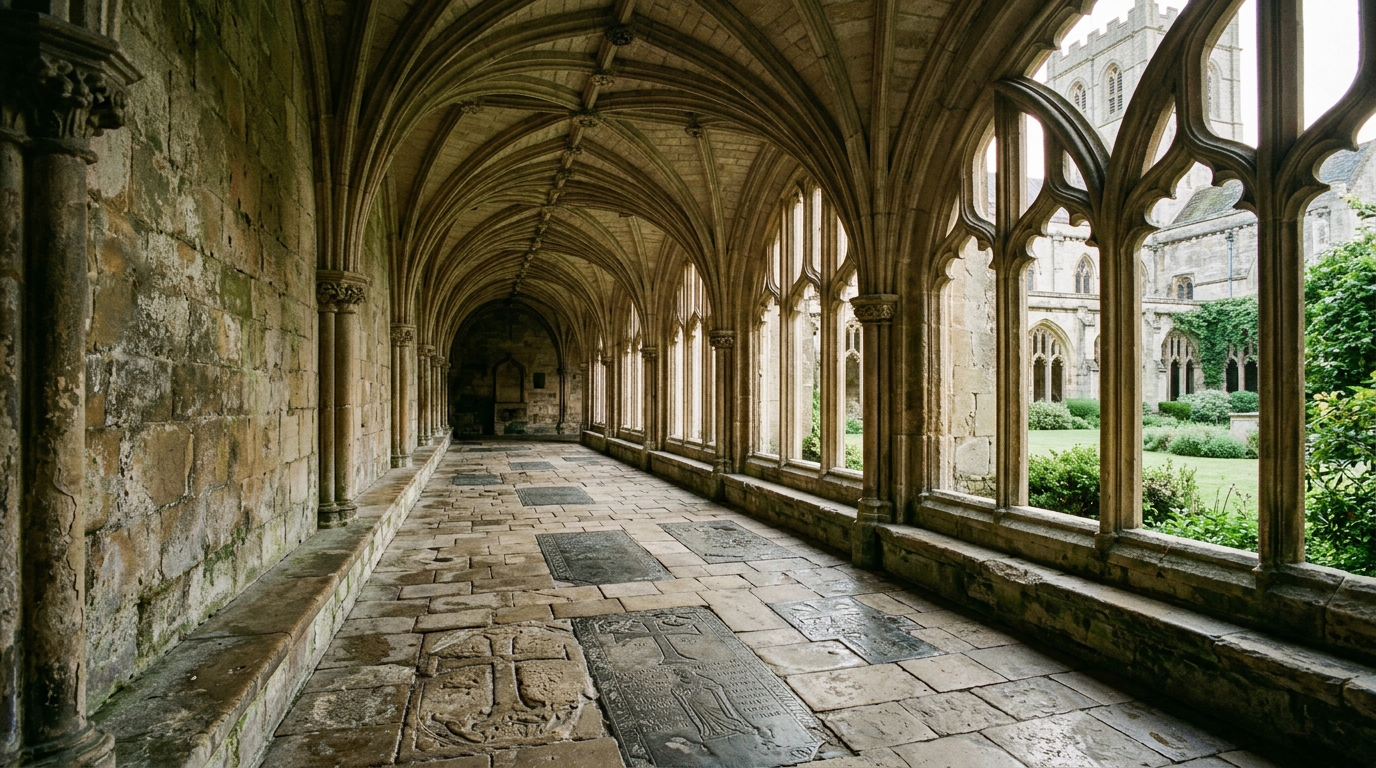

A Roman stone coffin at Westminster Abbey was probably reused for one of the abbey’s late Anglo-Saxon abbots, according to new research by the abbey’s consultant archaeologist, Professor Warwick Rodwell. Radiocarbon dating places the death of the man found inside the Westminster Abbey Roman sarcophagus between AD 987 and 1052, and Rodwell names two abbots of the period, Ælfwig and Wulfnoth, as the most likely candidates.
The study, titled “Westminster Abbey’s Roman sarcophagus and its afterlife”, appears in the Journal of the British Archaeological Association and was reported from 20 October 2026 by outlets including Live Science and Popular Science.
A Roman coffin with a medieval cross
The limestone sarcophagus, carved from stone quarried in what is now Oxfordshire, dates from Roman Britain. A Latin inscription on its side commemorates Valerius Amandinus, a wealthy Briton who lived in London at some point between about AD 300 and 400, and records that his sons paid for it.
Its lid tells a later story. In the 10th or 11th century it was recarved with a large Latin cross, a sign that the coffin had been taken over for a Christian burial centuries after Amandinus died. Rodwell has described the reuse of a Roman coffin for a medieval abbot as extremely unusual, Live Science reported.
Two centuries of mystery
The coffin has puzzled antiquarians for more than 200 years. According to Medievalists.net, workmen first uncovered it on Easter Monday 1820 and damaged the remains, possibly while searching for valuables. It was found again in 1869, when experts including the biologist Thomas Henry Huxley examined the bones. A Victorian assessment described the occupant as a robust young man of about 5ft 7in, no older than 30, ianVisits reports. The skeleton was later recorded as lost.
It was not. When the sarcophagus was opened for conservation in 2016, specialists from Pre-Construct Archaeology found the skeleton still inside, with about 90 per cent of it surviving.
More Read
What the new analysis found
The modern examination overturned the 19th-century picture. Human bone specialist James Young Langthorne of Pre-Construct Archaeology concluded that the man was aged between 35 and 49 and stood about 1.75m (5ft 9in) tall. The reports describe:
- signs of osteoarthritis, two healed rib injuries and possible gout;
- a radiocarbon date of AD 987 to 1052 at 95.4 per cent probability, from a bone sample tested by the Scottish Universities Environmental Research Centre;
- a white residue inside the stone coffin, identified as lime sprinkled over the body, marking the outline of a timber coffin that has since decayed.
Which abbot was buried in the Westminster Abbey Roman sarcophagus?
The date range points to the abbots who led Westminster’s Benedictine monastery in the decades before the Norman Conquest. Live Science reports that Rodwell considered three men: Wulfsige (abbot 988–993), Ælfwig (993 to about 1020) and Wulfnoth (about 1020–1049). Because Wulfsige probably left to become a bishop elsewhere, that leaves two.
“We have two viable contenders for the occupant of the sarcophagus,” Rodwell said, as quoted by Popular Science. He leans slightly towards Ælfwig, on the grounds that he was already a monk of Westminster before becoming abbot, although he notes that either man would fit the evidence if he took office young.
How it moved and where to see it
Rodwell believes the burial was disturbed during Henry III’s rebuilding of the abbey in the 1240s and that the coffin was moved to the new sacristy courtyard, probably around 1258. It then lay buried there for about seven centuries until the 1820 discovery. Where the sarcophagus stood in Roman times remains unknown: it may have come from a mausoleum or a villa near Westminster that has not yet been found.
The sarcophagus is now on permanent display in the abbey’s Queen’s Diamond Jubilee Galleries.
Why it matters
The study gives a rare physical link to the monks who ran Westminster before 1066, a period that survives mainly in documents. It also shows how objects from Roman Britain were valued and recycled by later generations, and how archaeological records can go astray: a skeleton written off as lost in the 19th century turned out to have been in place all along. For more on how archaeology keeps reshaping the story of famous religious sites, see our report on the hidden palace found beneath Rome.
Sources: Live Science, Case of mysterious medieval skeleton buried in Roman-era sarcophagus at Westminster Abbey finally solved (20 October 2026); Popular Science, Roman sarcophagus inside Westminster Abbey originally held a different body (20 October 2026); ianVisits, Roman coffin, Saxon bones: Fresh clues to Westminster Abbey mystery (22 October 2026); Archaeology Magazine, Roman Sarcophagus at Westminster Abbey Likely Held Remains of Medieval Monk (23 October 2026); Medievalists.net, Mysterious Skeleton at Westminster Abbey May Belong to Medieval Abbot (24 October 2026).

