



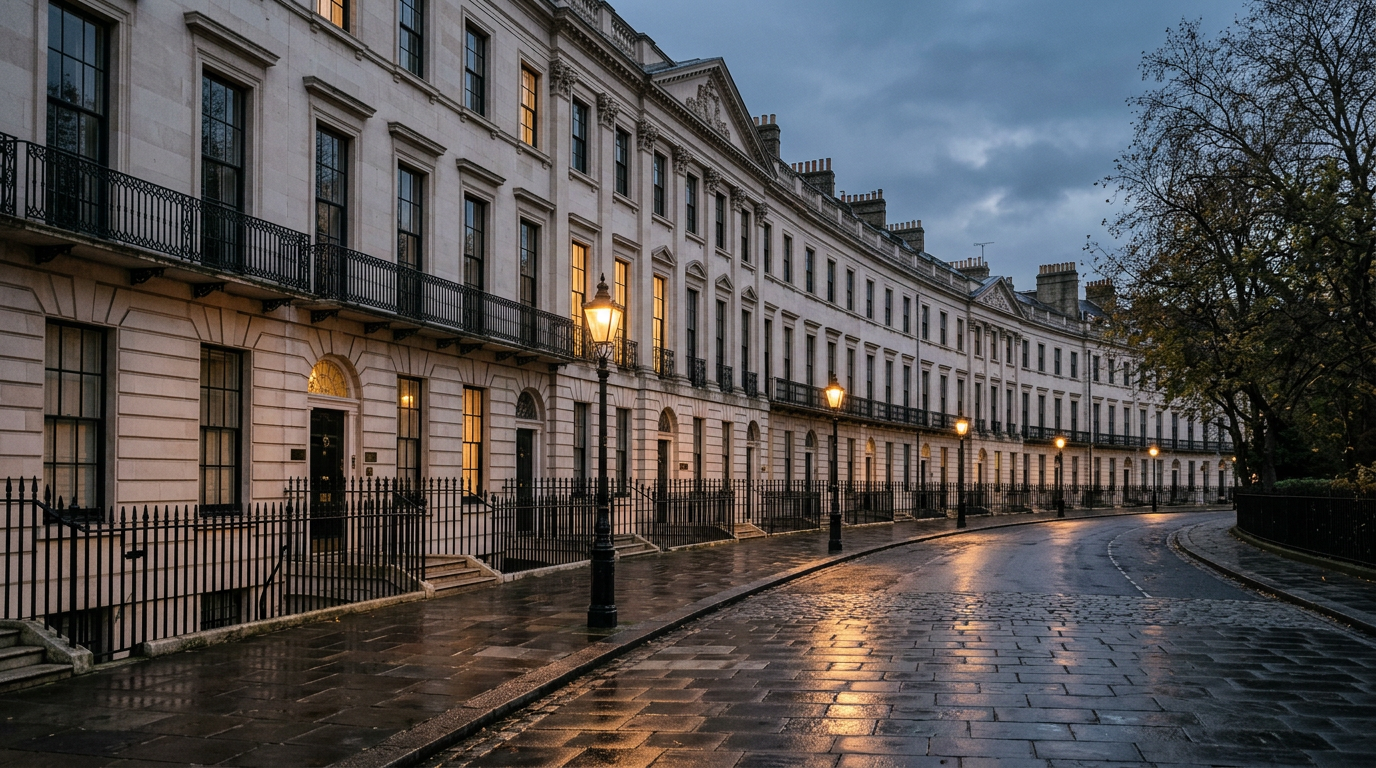

The St James’s gentlemen’s clubs grew out of the coffee and chocolate houses that clustered near the royal court at the end of the 17th century. White’s, which opened as a chocolate house in 1693, is the oldest. Boodle’s and Brooks’s followed in the 1760s, and in the 19th century political, scientific and travellers’ clubs built grand clubhouses along neighbouring Pall Mall. Together these streets became known as “clubland”, and many of the buildings, and several of the clubs, survive today. This is a short history of how it happened.
From coffee houses to clubs
Before there were clubhouses, there were taverns and coffee houses. In London Clubs: Their History & Treasures (1911), Ralph Nevill described how a club usually took shape. Regular customers would gather in a back room, and once a house had a respectable clientele, it became worth paying the landlord for the right to keep everyone else out. Nevill set out three stages: the public tavern or coffee house; a club that took over a house and kept the landlord on as manager; and finally the large clubhouse owned by its members. He reported that London had around 2,000 coffee houses in the early 18th century.
St James’s became the centre of this world because of the court. According to the Survey of London, the fire at Whitehall in 1697–98 pushed royal life towards St James’s, which helped turn St James’s Street into a fashionable address lined with clubs and coffee and chocolate houses. Its list includes White’s (1693), the Cocoa Tree (1698), the Smyrna (1702), the Thatched House Tavern (1704 or 1705) and the St James’s Coffee House (1705).
White’s: the first of the St James’s gentlemen’s clubs
White’s began in 1693, when Francis White, an Italian whose real name was probably Francesco Bianco according to the London Encyclopaedia, opened a chocolate house on the east side of St James’s Street. Records collected by the Grub Street Project place it on or very near the site of today’s Boodle’s. Within a few years White moved to a larger house across the street. The Survey of London dates the move to 1698, while other sources put it at about 1697.
Like the Cocoa Tree, White’s gradually turned from a chocolate house into a private club, and it became known for heavy gambling. Nevill called it a haunt of gamesters. The club settled at 37–38 St James’s Street in 1778. According to its Grade I listing, the building was rebuilt in 1787–88, probably by James Wyatt; the central bow window was added in 1811 and the front was remodelled in 1852. White’s still has an all-male membership.
Boodle’s, Brooks’s and the 18th-century rivals
Two rivals appeared in the 1760s, and both are still running.
Boodle’s
Boodle’s was founded in January 1762 by William Petty, the 2nd Earl of Shelburne, who later became prime minister. It took its name from an early head waiter, Edward Boodle, and in 1782 moved to its Grade I listed clubhouse at 28 St James’s Street. Its historical members included Adam Smith, the Duke of Wellington and Winston Churchill. Admission is still by nomination and election.
Brooks’s
Brooks’s grew directly out of a snub. Its own history says a society was formed in January 1762 after two men were blackballed, or rejected in the members’ ballot, at White’s. The club proper was founded in March 1764 by 27 leading Whig noblemen, including the Duke of Portland. It first met at 49 Pall Mall, a former tavern owned by William Almack, and was known simply as Almack’s. Its members drank, dined and gambled. The politician Charles James Fox was elected in 1765, aged 16.
In September 1777 the club’s manager, William Brooks, commissioned a purpose-built clubhouse in St James’s Street from the architect Henry Holland. It was finished in October 1778, and the club took Brooks’s name. With its Whig founders and its many political members, Brooks’s gave St James’s Street a political as well as a social character.
Pall Mall and the Victorian clubhouses
In the 19th century clubland spread along Pall Mall, and the clubs became grander and more specialised. The Survey of London’s volumes on St James’s include, on Pall Mall, the United Service Club, the Athenaeum, the Travellers Club and the Reform Club, and on St James’s Street, White’s, Boodle’s and the Carlton Club, which occupies the former home of Arthur’s.
The Athenaeum
The Athenaeum was founded on 16 February 1824 at the urging of John Wilson Croker, Secretary to the Admiralty. Its first committee met at the Royal Society, with Michael Faraday as secretary and Sir Humphry Davy as chairman. In February 1830 it moved into Decimus Burton’s Grecian clubhouse on the corner of Pall Mall and Waterloo Place. The building has a statue of Athena above the porch and a frieze copied from the Parthenon. To help pay its costs, the club admitted 40 extra members in 1838, known as the “Forty Thieves”. Among them were Charles Darwin and Charles Dickens.
The Travellers and the Reform
Further along Pall Mall stand two clubhouses by Charles Barry. The Survey of London records that the Reform Club was formed in February 1836 by Radicals with Whig backing, as a Liberal counterpart to the Carlton Club. It followed the passing of the Reform Act in 1832. The club opened in temporary rooms at 104 Pall Mall in May 1836 and chose Barry’s design at the end of 1837. The new building, in the style of the Roman High Renaissance and arranged around a top-lit central saloon, opened to members on 1 March 1841. The Survey says it set the pattern for later political clubhouses. Barry also designed the Travellers Club beside it, and Jules Verne made the Reform the club of Phileas Fogg in Around the World in Eighty Days.
The Second World War reached Pall Mall too. The Reform was badly damaged by enemy action in 1940–41, and the Athenaeum records that a German bomb hit the nearby Carlton Club on 14 October 1940.
Who could join, and how that changed
Clubland ran on nomination and election. A candidate needed members to put his name forward, and a hostile vote could keep him out, as the founders of Brooks’s had discovered. Some clubs built in ways around their own waiting lists. From 1830 the Athenaeum’s committee could invite a small number of especially distinguished people each year under its “Rule II”.
For most of their history the St James’s clubs admitted only men. That has changed slowly and unevenly. The Reform Club says it was the first of the traditional gentlemen’s clubs to admit women as members on equal terms. The Athenaeum admitted women in March 2001 after three debates over 17 years, and in 2018 it elected its first woman chairman. White’s remains men-only.
St James’s clubland today
Many of these clubs still occupy their historic buildings. White’s has been Grade I listed since 1958, and Boodle’s clubhouse is also Grade I listed. The model they created has spread far beyond St James’s. In a December 2025 article for City AM, Daniel Kyriakides, a real estate partner at the law firm Reed Smith, noted that London’s modern private members’ clubs trace their roots to these 18th- and 19th-century institutions, even as more of them now sit inside hotels.
The meaning of “club” has also widened to include music venues, such as the New York jazz club that won permission to open near Covent Garden. In St James’s, though, the word still means what it did three centuries ago: a private house run by and for its members.
Frequently asked questions
What is the oldest gentlemen’s club in London?
White’s, which began as a chocolate house on St James’s Street in 1693 and later became a private club.
Why are so many London clubs in St James’s?
Because of the court. After the Whitehall fire of 1697–98, royal life moved towards St James’s, and some of the coffee houses and chocolate houses that sprang up nearby became the first clubs.
What does “blackballed” mean?
It means being rejected in a club’s membership ballot. Brooks’s traces its origins to two men who were blackballed at White’s in 1762.
Do St James’s clubs admit women today?
Some do and some do not. The Reform Club and the Athenaeum, which first admitted women in 2001, both have women members, while White’s still has an all-male membership.
Sources: British History Online, Survey of London vols 29–30: St James’s Street (1960); British History Online, Survey of London vols 29–30: The Reform Club (1960); British History Online, Survey of London vols 29–30: list of plates (1960); Ralph Nevill, London Clubs: Their History & Treasures (Project Gutenberg) (1911); The Grub Street Project, White’s Chocolate House (accessed October 2026); British Listed Buildings, White’s Club (Historic England list entry 1264877) (accessed October 2026); Brooks’s, About Brooks’s (accessed October 2026); The Athenaeum, Our history (accessed October 2026); Country Life, The Reform Club (2 April 2023); Reform Club, The Club (accessed October 2026); The One Club, Boodle’s (1 June 2026); The One Club, White’s (1 June 2026); City AM, Private members’ clubs are the new face of London heritage (December 2025).

