




B.y Westferry Times Editorial | March 24, 2026
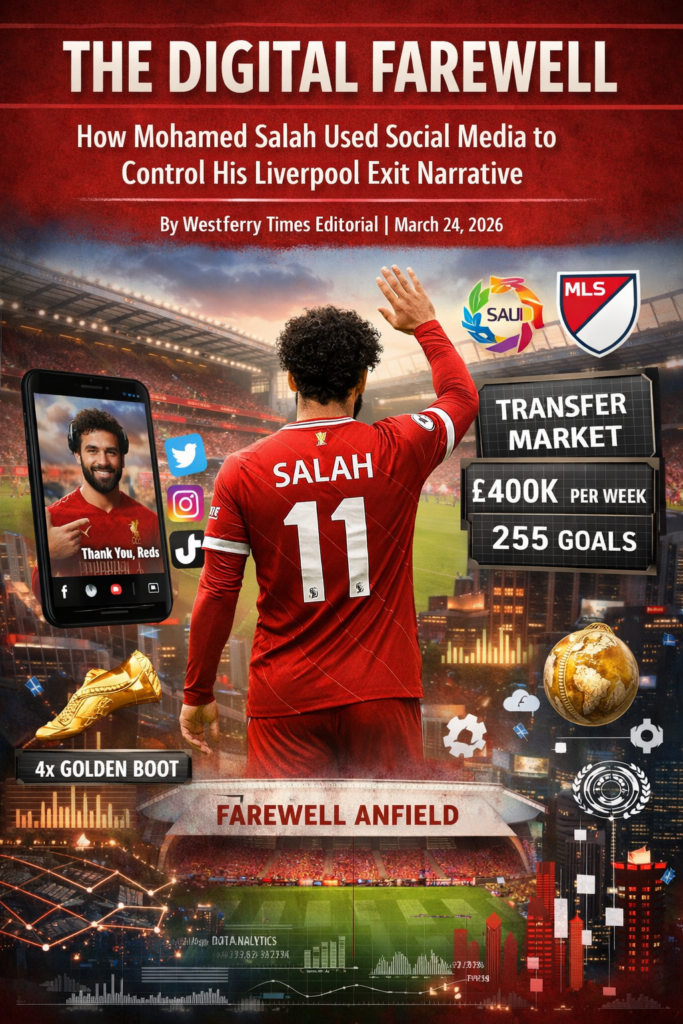
In an era where athletes increasingly bypass traditional media channels, Liverpool forward Mohamed Salah’s announcement of his departure from the club marks a significant moment in sports communication strategy. The 33-year-old Egypt international confirmed via a video message posted across his social media accounts that he will leave Anfield at the end of the season—a move that demonstrates the growing power of direct-to-fan digital platforms.
The Platform Pivot
Salah’s decision to release the news through his own channels rather than through a conventional press conference or exclusive media deal represents a broader shift in how high-profile sports figures manage their personal brands. By speaking directly to supporters, Salah controlled the timing, tone, and emotional framing of what will be one of the most significant departures in recent Premier League history.
“I never imagined how deeply this club, this city, these people would become part of my life,” Salah said in his video message. “Liverpool is not just a football club. It’s a passion. It’s a history. It’s a spirit.”
This approach mirrors strategies employed by tech entrepreneurs and startup founders who increasingly use direct communication channels—whether Substack newsletters, Twitter threads, or TikTok videos—to bypass traditional media gatekeepers.
The Data Behind the Decision
Salah’s Liverpool career has been nothing short of remarkable from a performance analytics perspective. Across 435 appearances, he scored 255 goals, placing him third in the club’s all-time scoring charts behind only Ian Rush (346) and Roger Hunt (285). His four Premier League Golden Boot awards and three PFA Player of the Year honors (2018, 2022, 2025) demonstrate sustained excellence that few modern players achieve.
However, the data tells a more complex story this season. With just 10 goals in 34 appearances across all competitions, Salah is on track for his lowest goal tally during his Anfield tenure—a statistical decline that likely influenced both his decision and the club’s willingness to negotiate an early exit from his contract, signed only in April 2025.
The Business of Departure
From a financial technology and sports business perspective, Salah’s exit raises fascinating questions about contract optimization and asset valuation. Reports suggest his wages stand at approximately £400,000 per week. Liverpool’s decision to allow a free transfer rather than seek a fee in the January window represents a calculated risk—trading immediate transfer revenue for wage bill reduction and squad harmony.
For startups and business leaders watching this unfold, there’s a lesson in strategic patience. Liverpool’s statement emphasized that Salah wished to inform supporters “at the earliest possible opportunity” and provide “transparency about his future due to his respect and gratitude for them.” This transparency-first approach, while potentially disruptive to season momentum, may protect long-term brand equity with the club’s global fanbase.
What’s Next: The Transfer Marketplace
The technology of modern football transfers has evolved dramatically since Salah joined Liverpool from Roma in June 2017. Data analytics platforms, AI-driven scouting tools, and blockchain-based contract management systems now play significant roles in how clubs identify and acquire talent.
Where Salah lands next remains unclear. At 33, he enters a different market segment—one where experience and commercial value often outweigh pure performance metrics. Saudi Pro League clubs, with their substantial digital streaming ambitions and appetite for global star power, represent a logical destination from a business technology standpoint. Alternatively, Major League Soccer’s growing media rights portfolio and Apple TV+ partnership could offer a platform for Salah to extend his brand into North American markets.
The Fan Engagement Equation
Perhaps most interesting for digital media strategists is how Liverpool plans to “show their appreciation” for Salah in the coming months. The club explicitly stated that “the time to fully celebrate his legacy and achievements will follow later in the year when he bids farewell to Anfield.”
This phased approach to fan engagement—announcing the departure early while deferring the celebration—suggests sophisticated content calendar planning. It allows the club to maintain competitive focus while building anticipation for what will likely be a highly produced, multi-platform farewell campaign spanning social media, streaming documentaries, and potentially NFT or digital collectible offerings.
Conclusion
Salah’s Liverpool departure illustrates how deeply technology has transformed even the most traditional aspects of sports. From direct-to-consumer video announcements to data-driven contract decisions and digitally-native fan engagement strategies, this exit represents more than just the end of a brilliant playing career—it signals the continued evolution of how athletes, clubs, and supporters interact in an increasingly connected ecosystem.
As Liverpool chases Champions League glory and FA Cup success in Salah’s final months, the digital narrative surrounding his farewell will likely prove as compelling as the on-field drama. For technologists, entrepreneurs, and digital strategists, it’s a case study worth watching closely.
Westferry Times covers the intersection of technology, business, and innovation. Follow us for analysis of how digital transformation is reshaping industries worldwide.

