



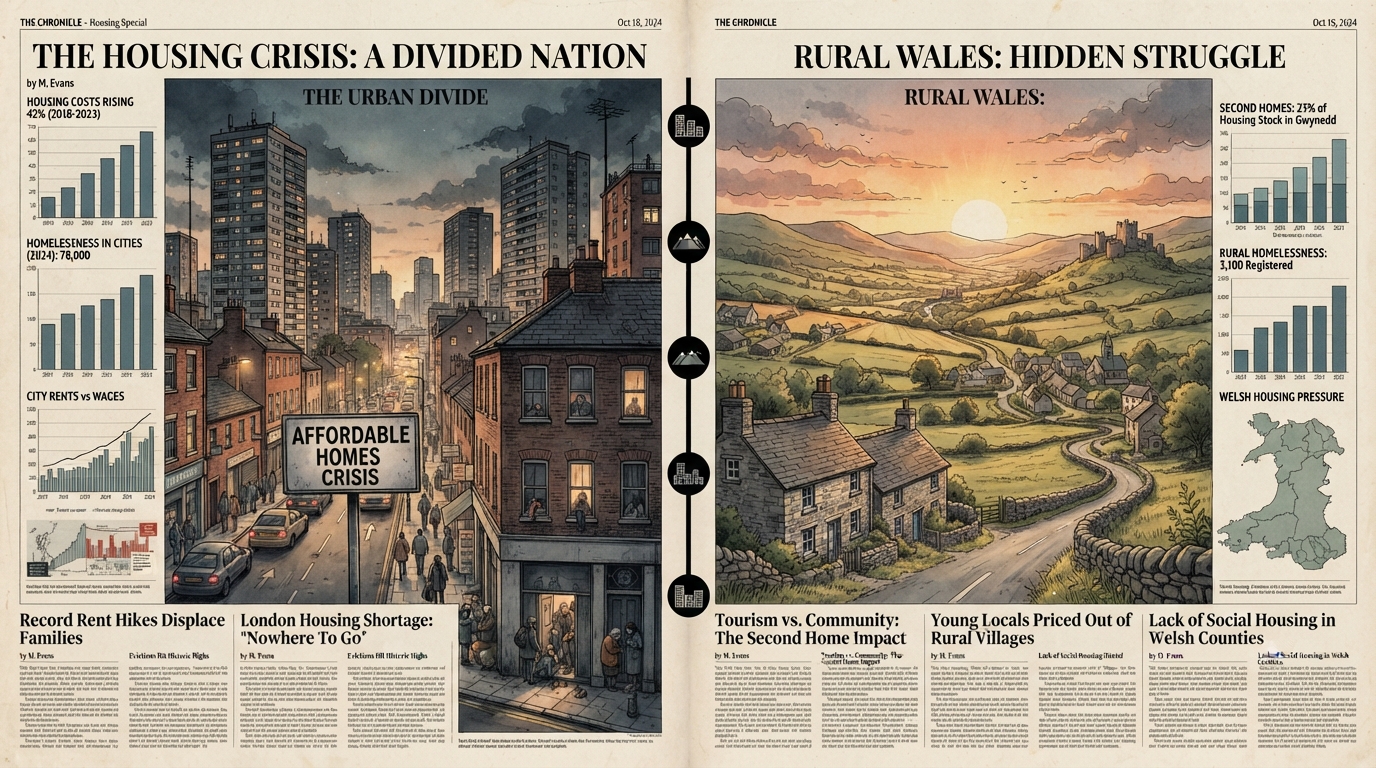

Overview of Homelessness in the UK: Cities vs. Rural Areas
Homelessness in the UK manifests differently depending on geography. Official government datasets (from the Ministry of Housing, Communities and Local Government [MHCLG] in England and the Welsh Government) separate homelessness into statutory homelessness (households owed a housing duty by local councils), temporary accommodation (TA) placement, and rough sleeping.
- Urban Centers: Cities face the highest volume of statutory homelessness and reliance on temporary accommodation. High housing costs, high numbers of private renters facing Section 21 “no-fault” evictions, and constrained social housing stocks mean major urban areas (especially London, Manchester, Birmingham, and Luton) experience acute crises.
- Rural & Coastal Areas: Rural and semi-rural regions often display “hidden homelessness”—such as people sofa-surfing, living in vehicles, or staying in temporary holiday/caravan parks due to a lack of rental stock and the explosion of holiday lets/second homes. While raw numbers are lower than major cities, rural per capita rates in tourist or isolated regions can be surprisingly severe.
Situation in North Wales
North Wales (comprising counties such as Anglesey, Gwynedd, Conwy, Denbighshire, Flintshire, and Wrexham) faces distinct regional pressures driven by rural economics, housing stock shortages, and seasonal tourism:
- The Scale: Welsh Government homelessness data indicates thousands of individuals and households across Wales cycle through statutory housing assistance or temporary arrangements.
- Key Drivers in North Wales:
- Holiday Lets & Second Homes: Particularly in coastal and rural counties like Gwynedd, Anglesey, and Conwy, the prevalence of Airbnbs and second homes drastically restricts long-term rental availability, pushing local families out of the market.
- Reliance on B&Bs and Alternative Accommodation: Due to a lack of standard social housing and emergency apartments, rural North Wales local authorities have frequently had to rely on caravan parks, holiday accommodations, and bed-and-breakfasts to house emergency cases.
- Service Leavers & Hidden Hardship: Rural councils report significant flows of vulnerable groups—such as prison leavers or individuals facing rural poverty—struggling to secure stable local housing due to sparse infrastructure.
City Comparison: How Do Major Cities Like Birmingham and Liverpool Compare?
When looking at government statutory returns and independent reports (such as those from Shelter and local authority audits), cities vary widely in their rates of homelessness relative to their population size.
1. High-Pressure Cities (Highest Rates Overall)
Outside of London (which holds the highest concentration overall), towns and cities experiencing the most acute homelessness per head include:
- Slough and Luton: Frequently record some of the highest statutory homelessness rates in England (e.g., upwards of 1 in 51 to 1 in 57 residents impacted) due to high housing stress and proximity to capital spillover.
- Manchester: Ranks among the highest major northern cities, with dense temporary accommodation populations (approximately 1 in 61 residents affected).
2. Major Core Cities: Birmingham and Liverpool
- Birmingham: As one of the largest local authorities in Europe, Birmingham experiences high absolute numbers of statutory homeless applications. Due to severe structural pressures on social housing and rapid population growth, Birmingham City Council routinely manages thousands of households in temporary accommodation or emergency housing duties.
- Liverpool: While Liverpool also faces urban deprivation and high demand for social housing, its statutory homelessness and temporary accommodation rates per head typically sit lower than high-pressure southern commuter towns (like Slough/Luton) or major northern hotspots like Manchester. However, Liverpool still deals with substantial street-level rough sleeping and systemic housing stress compared to smaller surrounding rural boroughs.
Summary Table: Regional Divide
| Region / Area Type | Primary Form of Homelessness | Main Drivers |
| Major Cities (London, Manchester, Birmingham) | Temporary accommodation congestion, family homelessness | High private rents, lack of social housing, eviction notices |
| Rural / Coastal (e.g., North Wales – Gwynedd, Conwy) | Hidden homelessness, reliance on caravan/holiday lets and B&Bs | Second-home ownership, holiday lets, lack of local rental stock |
| Industrial / Post-Industrial Cities (e.g., Liverpool) | Statutory housing duties, localized rough sleeping | Economic deprivation, poverty, complex support needs |

