




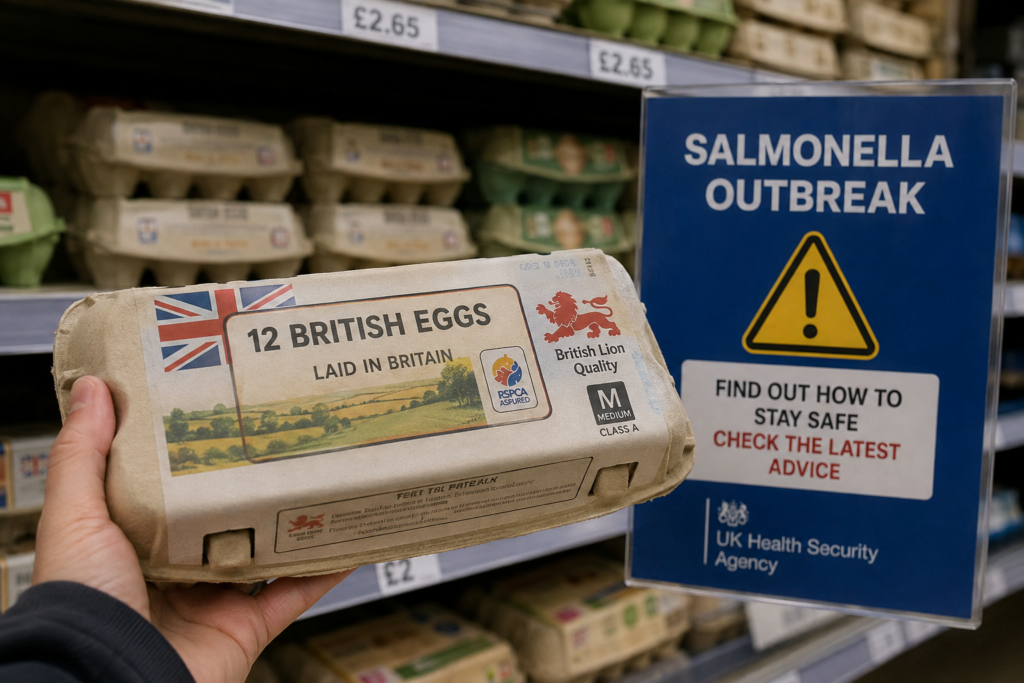
A person has died and hundreds more have fallen ill in a UK-wide salmonella outbreak that health officials believe is connected to food made with imported eggs.
The UK Health Security Agency (UKHSA) has opened an investigation into 207 confirmed cases recorded over the past year, with the majority reported in recent weeks. More than a third of those affected have required hospital treatment, and two people went on to develop serious blood poisoning. Most patients recover without medical intervention, but officials say what makes this outbreak unusual is that it involves a single, identical strain of the bacterium rather than the scattered mix of strains typically behind seasonal food poisoning cases.
Who Has Been Affected
Cases span a wide age range, from infants to a 90-year-old, and have been recorded across all four nations of the UK. England accounts for the overwhelming majority — 199 of the 207 cases — including 47 in London and 38 in Yorkshire and Humber. Scotland has recorded six cases, with one each in Wales and Northern Ireland.
Hannah Charles, UKHSA’s lead epidemiologist for gastrointestinal infections, said the agency is working alongside the Food Standards Agency (FSA) and other public health bodies to trace the outbreak, which may be tied to eggs sourced from outside the UK.
Symptoms and Advice
Salmonella infection typically causes stomach cramps, diarrhoea, vomiting and fever, usually appearing between 12 and 72 hours after exposure. Anyone concerned they may be infected is advised to contact their GP or an out-of-hours service.
The bacterium can be present in a range of foods, including undercooked poultry, meat and eggs. Thorough cooking, along with careful handwashing before food preparation and after using the bathroom, remains the most effective way to reduce risk.
Tracing the Source
Investigators say the pattern of illness points toward meals eaten outside the home rather than food prepared domestically. Of the confirmed cases, 24 have been linked to food businesses known to use imported eggs. UKHSA has stated that, at this stage, there is no evidence connecting the outbreak to UK-produced eggs or poultry, and that additional precautionary measures will be introduced if the ongoing investigation warrants them. The agency has stressed that the risk to the wider public remains low.
The FSA’s Jacquelyn McCormick advised that thoroughly cooked and hygienically handled eggs should not pose a food safety risk, but recommended that infants, young children, pregnant people and older adults stick to eggs carrying the British Lion mark or produced under the Laid in Britain assurance scheme if eating them runny or raw. She also urged anyone handling eggs, eggshells or egg packaging to wash their hands thoroughly afterwards.
Dr Kathleen O’Reilly of the London School of Hygiene and Tropical Medicine suggested diners consult food hygiene ratings when choosing where to eat, as a practical precaution while the investigation continues.
Industry Response
Nick Allen, chief executive of the British Egg Industry Council, pointed to differences in regulatory standards, noting that while UK hens are subject to mandatory salmonella vaccination, a growing volume of imported eggs enters the country from operations governed by less rigorous rules.
What Happens Next
UKHSA has described its food chain and epidemiological investigations as ongoing and “extensive,” with egg consumption remaining the leading line of inquiry. Health officials expect further cases may still emerge, partly because some people who fall ill with milder symptoms never report them to health services.
Source: BBC News, 18 August 2026

